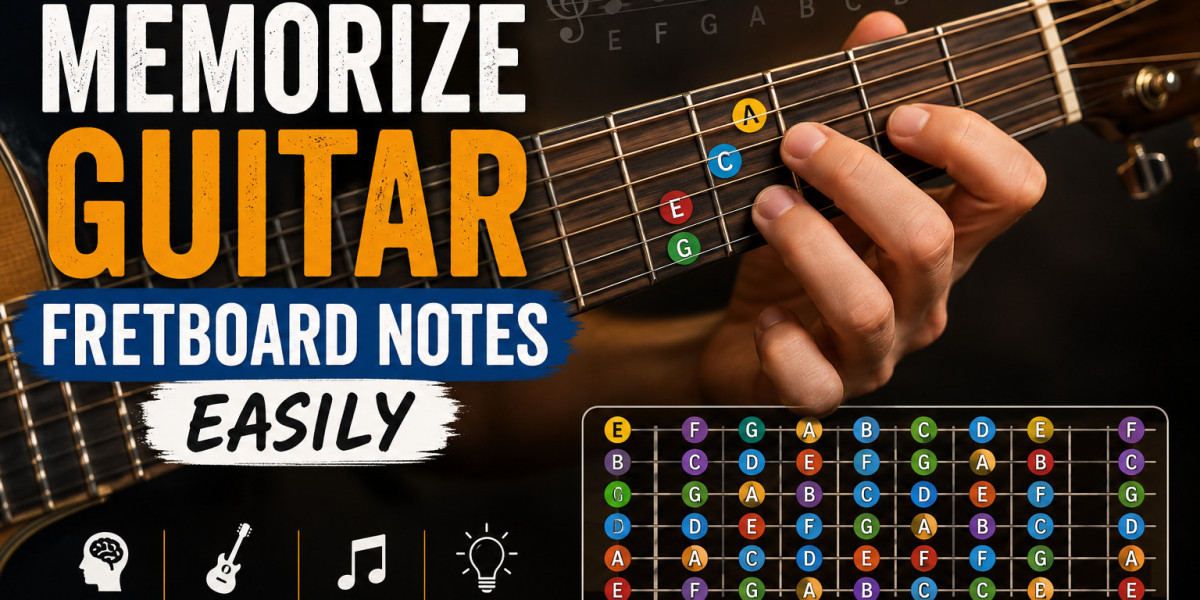
Learning guitar fretboard notes is one of the most important steps for becoming a better guitarist. Many beginners focus only on chords and songs, but understanding the fretboard opens the door to faster playing, smoother improvisation, better solos, and stronger music theory knowledge.
If you can quickly identify notes across the neck, you will improve your confidence, creativity, and overall guitar performance. Whether you play acoustic or electric guitar, memorizing the fretboard helps you understand how music works on your instrument.
Many players using premium instruments from Zager Guitars find that comfortable playability and smooth neck design make fretboard learning easier and more enjoyable. In this guide, you will discover simple and effective ways to memorize guitar fretboard notes quickly.
Why Learning Guitar Fretboard Notes Matters
Many guitarists spend years playing songs without fully understanding the notes they are using. While memorizing chord shapes can help you play basic music, knowing the actual notes across the neck gives you much greater freedom.
Understanding guitar fretboard notes helps you:
- Learn scales faster
- Build chords more easily
- Improve improvisation
- Play solos confidently
- Understand music theory
- Communicate with other musicians
Professional guitarists rely heavily on fretboard knowledge because it improves both creativity and technical skill.
Understanding the Guitar Fretboard Layout
Before memorizing notes, it is important to understand how the fretboard is organized. Standard guitars contain six strings:
- E
- A
- D
- G
- B
- E
Each fret represents a half-step in music. Moving one fret higher raises the pitch by one note.
The musical alphabet contains only:
A, B, C, D, E, F, and G.
There are no sharp notes between:
- B and C
- E and F
This simple pattern repeats across the entire fretboard.
Start with the Open Strings
The easiest way to begin learning guitar fretboard notes is by memorizing the open strings first.
From thickest to thinnest string:
- E
- A
- D
- G
- B
- E
A common memory phrase is:
“Eddie Ate Dynamite, Good Bye Eddie.”
Once you know the open strings, finding notes on the fretboard becomes much easier.
Learn the Natural Notes First
Many beginners try learning every sharp and flat note immediately, which can become overwhelming. Instead, focus first on natural notes:
A, B, C, D, E, F, and G.
For example, on the low E string:
- Open = E
- 1st fret = F
- 3rd fret = G
- 5th fret = A
- 7th fret = B
- 8th fret = C
- 10th fret = D
- 12th fret = E
This pattern repeats on every string.
Learning natural notes first creates a strong foundation for understanding the entire neck.
Use Octave Shapes to Learn Faster
One of the best methods for memorizing guitar fretboard notes is using octave patterns. Octaves are the same notes played at different pitches.
For example:
- A note on the low E string can often be found two strings down and two frets higher.
This allows you to locate notes quickly across the fretboard without memorizing every position individually.
Octave shapes help guitarists:
- Navigate the neck faster
- Improve improvisation
- Learn scales more efficiently
Most professional players rely heavily on octave recognition.
Practice One String at a Time
Trying to memorize the entire fretboard in one day usually creates confusion. Instead, focus on one string at a time.
Start with the low E string because many root notes and power chords are built from this string.
Spend a few minutes daily naming notes aloud:
- F
- G
- A
- B
- C
Then repeat the process on the A string and continue gradually.
Consistent short practice sessions work much better than long overwhelming sessions.
Use Visual Patterns
The guitar fretboard contains repeating visual patterns that help simplify learning.
Important fret markers often appear at:
- 3rd fret
- 5th fret
- 7th fret
- 9th fret
- 12th fret
The 12th fret repeats the open string notes one octave higher.
Recognizing these patterns helps you locate notes much faster while playing.
Practice with Scales
Scales are excellent tools for learning guitar fretboard notes because they repeatedly expose you to note locations.
Popular beginner scales include:
- Major scale
- Minor pentatonic scale
- Blues scale
As you practice scales, say each note aloud while playing. This strengthens memory and connects visual patterns with sound recognition.
Over time, the fretboard becomes more familiar naturally.
Use Songs to Reinforce Learning
Applying fretboard knowledge to real music improves retention. Instead of only memorizing patterns mechanically, use songs and riffs to identify notes during practice.
Ask yourself:
- What note does the riff start on?
- Which notes form this chord?
- Where are the root notes?
This practical approach makes learning more enjoyable and effective.
Why Comfortable Guitars Help Learning
Practicing fretboard exercises for long periods can become tiring on uncomfortable instruments. Many guitarists choose Zager Guitars because their smooth neck design and easy-play setup help reduce finger strain.
A comfortable guitar allows players to:
- Practice longer
- Improve finger movement
- Learn faster
- Stay motivated
Good playability becomes especially important when practicing scales, note drills, and technical exercises daily.
Learn Notes Around Common Chords
Many notes become easier to remember when connected to chord shapes.
For example:
- A major chord centers around the note A
- G major centers around G
By understanding where root notes appear inside chords, you naturally strengthen your fretboard memory.
This method also improves rhythm playing and songwriting skills.
Use Fretboard Diagrams
Visual diagrams are powerful learning tools for mastering guitar fretboard notes.
Fretboard charts help players:
- Visualize note locations
- Recognize patterns
- Understand intervals
- Practice note recall
Many musicians print fretboard diagrams and practice identifying notes daily.
Train Your Ear Alongside Your Eyes
Memorizing notes becomes easier when connected with ear training. Instead of only looking at note positions, listen carefully to how each note sounds.
This develops:
- Pitch recognition
- Musical memory
- Better improvisation
- Stronger musical understanding
Professional musicians combine visual and listening skills together for faster improvement.
Common Mistakes Beginners Make
Many guitarists slow their progress by:
- Trying to memorize everything at once
- Ignoring note names during practice
- Avoiding music theory completely
- Practicing inconsistently
Patience and consistency are the keys to long-term success.
Even learning a few notes every day creates major improvement over time.
How Long Does It Take to Learn Guitar Fretboard Notes?
Every player learns at a different speed. With daily practice, many guitarists begin recognizing notes confidently within a few weeks.
Complete mastery may take several months, especially when learning advanced theory and improvisation. However, small daily improvements quickly build strong fretboard knowledge.
The important thing is consistency rather than speed.
Benefits of Memorizing Guitar Fretboard Notes
Once you fully understand guitar fretboard notes, your playing improves dramatically.
You will:
- Learn songs faster
- Build solos more confidently
- Understand scales deeply
- Create better melodies
- Communicate with musicians easily
- Improve overall musicianship
Fretboard mastery is one of the biggest differences between casual players and advanced guitarists.
Conclusion
Learning guitar fretboard notes may seem difficult at first, but with the right approach, it becomes much easier over time. By practicing one string at a time, using octave shapes, learning scales, and applying notes to real songs, you can gradually master the entire neck.
A comfortable and easy-to-play guitar also makes a huge difference during practice sessions. That is why many players trust Zager Guitars for smooth playability and professional performance.
With patience, consistency, and proper practice methods, memorizing the guitar fretboard can completely transform your playing skills and musical confidence.
Frequently Asked Questions
Why are guitar fretboard notes important?
They help improve improvisation, soloing, scale knowledge, and overall understanding of music theory.
What is the fastest way to learn fretboard notes?
Practice one string at a time and use octave shapes to recognize repeating patterns.
Should beginners learn fretboard notes?
Yes. Early fretboard knowledge helps beginners progress faster and understand music more deeply.
How long does it take to memorize the fretboard?
With consistent daily practice, many players begin recognizing notes confidently within a few weeks.
Do professional guitarists memorize every note?
Yes. Most advanced guitarists know the fretboard extremely well because it improves creativity and performance.