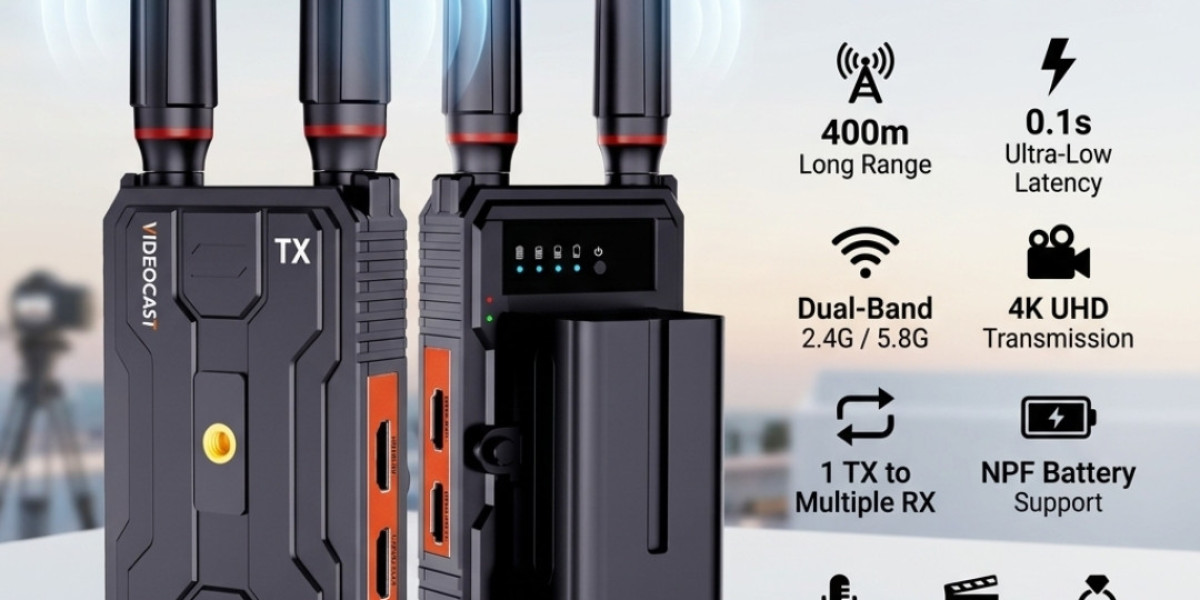
In modern broadcasting, speed, mobility, and reliability define production quality. Wireless video transmission has become essential for live events, news coverage, sports production, and corporate streaming. Broadcast teams now demand low-latency, high-definition video delivery without the limitations of cables.
This guide explores how professional wireless video transmission solutions enhance production efficiency—and what to consider when choosing the right system.
Why Wireless Video Transmission Matters
Traditional wired setups restrict camera movement and increase setup complexity. Wireless systems eliminate these barriers by enabling:
- Real-time video monitoring across multiple devices
- Flexible camera placement for dynamic shots
- Faster setup and teardown for live productions
- Reduced cable clutter and improved safety
For broadcast teams, this translates directly into higher production value and operational efficiency.
Key Features of Professional Systems
1. Ultra-Low Latency
Latency is critical in live broadcasting. Professional systems deliver latency as low as 60ms, ensuring near real-time transmission for seamless switching and monitoring.
2. Long Transmission Range
High-end wireless transmitters support long-distance transmission (up to 300–500 meters or more), ideal for outdoor events, stadiums, and large venues.
3. Stable Signal with Dual-Band Technology
Advanced systems operate on 2.4GHz + 5GHz dual-band frequencies, minimizing interference and ensuring stable connectivity even in crowded RF environments.
4. Full HD & 4K Support
Modern broadcast workflows demand high resolution. Professional solutions support 1080p60 and 4K video, maintaining image clarity for premium productions.
5. Multi-Device Monitoring
Transmit video simultaneously to multiple receivers, monitors, or mobile devices—enhancing collaboration between directors, camera operators, and technical teams.
Use Cases Across Industries
Live Event Production
Concerts, conferences, and weddings require dynamic camera angles. Wireless transmission allows operators to move freely without compromising signal quality.
Broadcast & News
Field reporters rely on portable, reliable transmission systems to deliver live feeds instantly from remote locations.
Sports Coverage
Capture fast-paced action with roaming cameras while maintaining stable, real-time feeds to the control room.
Corporate & Education Streaming
Professional wireless setups simplify hybrid events, webinars, and training sessions with minimal technical complexity.
Choosing the Right Wireless Video Transmission Solution
When selecting a system, broadcast teams should evaluate:
- Latency requirements (critical for live switching)
- Transmission distance based on production scale
- Input/output compatibility (HDMI/SDI support)
- Network stability features (frequency hopping, bonding tech)
- Portability and power options
Investing in the right solution ensures consistent performance across diverse production environments.
Future Trends in Wireless Broadcasting
Wireless video technology continues to evolve with innovations such as:
- 5G-enabled transmission for ultra-reliable connectivity
- AI-based signal optimization to reduce interference
- Cloud integration for remote production workflows
These advancements are shaping the future of broadcast production, making it more scalable and efficient.
Conclusion
Professional VIDEOCAST wireless video transmission is no longer optional - it’s a core component of modern broadcast workflows. By enabling mobility, reducing setup time, and ensuring high-quality real-time video delivery, these systems empower broadcast teams to produce exceptional content under any conditions.
For organizations looking to upgrade their production capabilities, investing in a reliable wireless transmission solution is a strategic move toward future-ready broadcasting