
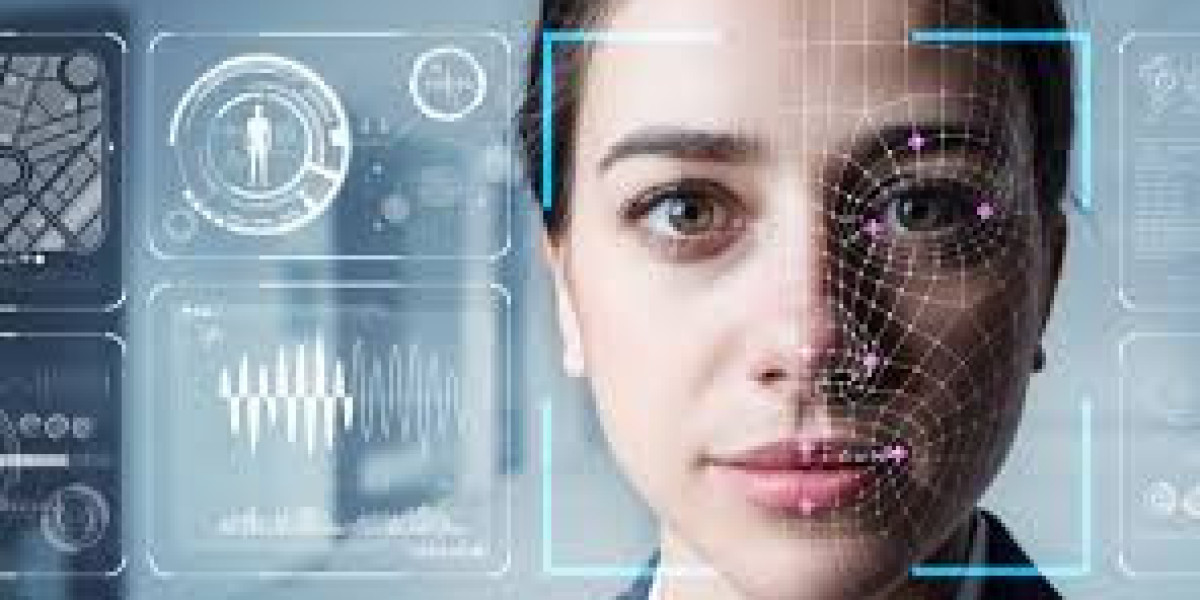
Traditional security systems often struggle to keep up with modern fraud tactics. Standard passwords and PIN codes leak easily, leaving personal data open to unauthorized access. Businesses need smarter systems to confirm that a person logging in is truly who they claim to be. Deploying modern facial recognition services helps fix these gaps by turning a physical face into an irreplaceable security key.
Identity checking systems rely heavily on comparing fresh face scans against official documents like passports. This process, often called facial similarity analysis, maps distinct facial landmarks to calculate a geometric match. Banks and remote workplaces use this method to onboard people safely from anywhere. It stops criminals from using stolen ID cards because the physical face must match the photo on file.
The Core Mechanics of Modern Verification
The math behind these systems looks at the distance between eyes, the shape of a jawline, and the depth of eye sockets. Through deep facial similarity analysis, mathematical models transform these measurements into a unique string of numbers. Security platforms compare this data instantly against database records. Using facial recognition services turns a slow, manual verification process into something that happens in seconds.
Older biometrics could sometimes be fooled by a high-resolution printout or a video playback on a phone screen. Modern tools fix this by adding liveness checks, which require the user to blink or turn their head. Software looks for skin texture, depth, and micro-movements to prove a living human is present. This layer blocks deepfakes and static image fraud before access is granted.
Preventing Fraud in High-Stakes Industries
Fintech applications and digital wallets use these tools to protect massive financial transactions. When a user requests a large wire transfer, the app requests a quick face scan to authorize the movement of funds. Integrating facial recognition services directly into smartphone apps cuts down on identity theft drastically. It creates a seamless barrier that keeps hackers out while letting legitimate owners pass through without friction.
Some fraud attempts involve family members trying to unlock devices or accounts using shared physical traits. Standard systems sometimes struggle with close relatives, making specialized software helpful for detecting minute differences. Minor details like pore distribution, subtle bone structure variations, and iris placement separate closely related individuals. This prevents casual account sharing or deliberate unauthorized entry by relatives.
Future Proofing System Security
Identity verification must constantly adapt because criminals find new loopholes every day. Security networks update their algorithms to spot synthetic media and AI-generated masks. Relying on cloud-based facial recognition services allows companies to deploy security patches instantly without requiring manual software updates from the end user. This keeps defense systems strong against emerging cyber threats.
Systems now look deeper into specific edge cases, like sibling face matching, to avoid false positives in family households. Twins or close siblings can share striking visual traits that deceive basic cameras. Specialized sibling face matching handles these overlaps by raising verification thresholds during high-risk login attempts. The extra layer guarantees that a system remains secure even under complex, lookalike scenarios. Face DNA Test provides special services to individuals looking for face matching or DNA testing facilities. The lab is highly equipped with advanced technology instruments to deliver 99.9% accurate and clear results.
Final Thoughts on Digital Protection
Relying purely on text passwords or physical tokens no longer protects digital spaces well enough. Biological data offers a reliable path toward keeping personal files and corporate networks locked tight. The switch toward face-based security helps platforms scale up their defenses without slowing down daily user interactions.
As technology moves forward, security protocols will continue to rely on unique physical markers. The blend of instant matching and anti-spoofing logic makes face scans a solid foundation for digital trust. Implementing these verification steps protects systems from sophisticated spoofing attempts while keeping data access straightforward for authentic users.






