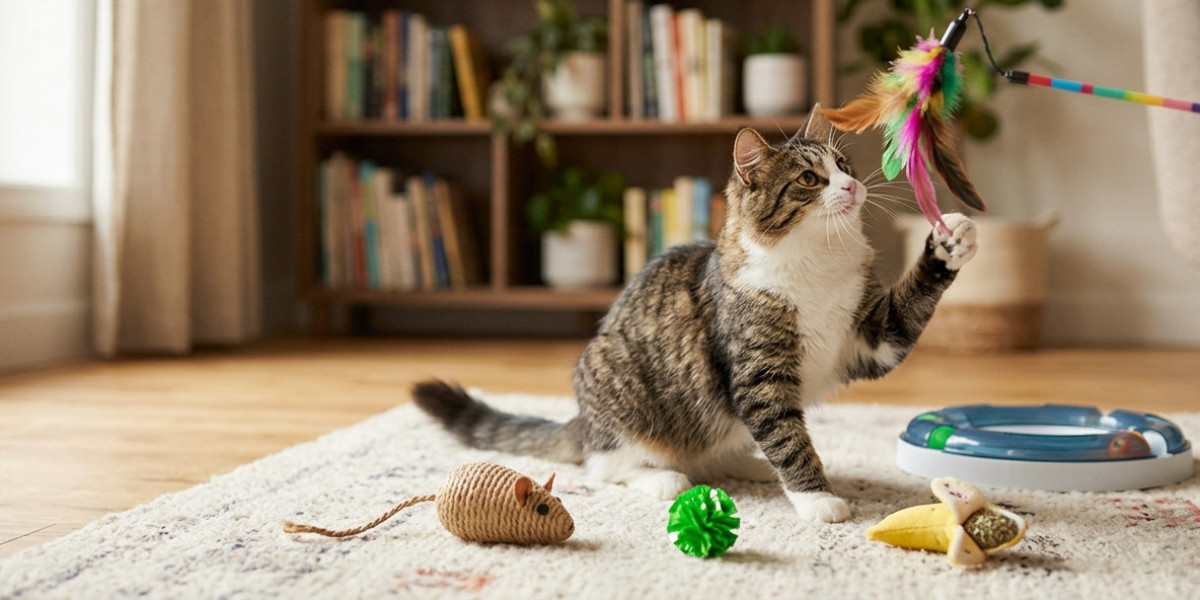
You walk into your living room and notice a familiar, slightly chaotic scene. Scattered across the rug are felt mice, crinkle balls, plastic springs, and stuffed plush items. At the center of this plastic wasteland sits your feline companion, staring blankly out the window with an expression of profound boredom.
It is a common paradox for pet parents. You buy an abundance of items to ensure your indoor pet stays active and mentally stimulated. Yet, despite the vast hoard available, they refuse to interact with any of them. Your pet is not being ungrateful or lazy. Instead, they are likely suffering from a documented behavioral phenomenon known as anarchy fatigue, driven by sensory overload and the loss of novelty. Understanding how a feline’s brain processes their environment can help you transform a cluttered living room into a highly engaging, structured hunting ground.
The Science of Anarchy Fatigue and Feline Boredom
To understand why a mountain of entertainment options leads to total apathy, you must examine how felines interact with objects in their environment.
Habituation and the Loss of Novelty
In animal psychology, habituation occurs when an animal stops responding to a stimulus after repeated exposure. If a mouse toy sits in the exact same corner of the hallway for three weeks, your pet’s brain ceases to recognize it as a separate object. It effectively becomes part of the architecture, like a baseboard or a table leg. When a room is constantly cluttered with options, the lack of change causes the brain to desensitize to all of them simultaneously.
Sensory Overload and Choice Paralysis
In the wild, a predator encounters one prey choice at a time. They spot a single bird or follow a single scent trail. When a domestic environment presents ten different options on the floor at once, it triggers choice paralysis. The sheer volume of sensory data—competing textures, old catnip scents, and various colors—overwhelms their focused tracking instinct. Rather than engaging in a chaotic environment, your pet chooses to opt out entirely, leading to lethargy and what looks like chronic pickiness.
Devaluation of the Hunt
Felines are hardwired for the predatory sequence: stare, stalk, pounce, capture, and bite. When items are left strewn across the floor permanently, the "capture" phase is constantly active. The toy is already dead, conquered, and stationary. Without the element of sudden appearance or movement, the object loses its value as simulated prey.
The Strategy of Toy Rotation
The definitive fix for anarchy fatigue is a structured rotation schedule. Instead of leaving your entire collection accessible, you curate their environment to maintain a high level of psychological value for each item.
A lean environment mimics natural ecosystem shifts. By storing the majority of your collection out of sight in a sealed container and offering only two or three items at a time, you ensure that every reintroduction feels like a brand-new discovery.
When choosing the right gear to build a rotation inventory, focusing on items that tap into distinct sensory triggers like auditory cues, authentic textures, or fresh scent profiles—is essential. Investing in varied cat toys ensures you have a diverse pool of options to swap out every few days. High-quality designs, such as ourpets cat toys, are particularly effective because they integrate realistic predatory triggers, such as electronic squeaks or premium herb fillings, making them ideal anchor pieces for a rotation cycle.
Excellent Rotation Anchors Available at Kwik Pets
Building an effective rotation system requires items that look, sound, and feel distinct from one another. Utilizing specialized configurations ensures that each swap offers a completely different predatory experience.
OurPets Three Twined Mice Catnip Instinct Toy
Felines are highly sensitive to tactile sensations. These mice utilize distinct twined textures that feel entirely different from smooth plastic or standard synthetic fur under a feline's claws. Infused with aromatic filling, they trigger the investigative sniffing phase of the hunt. When introduced into a rotation after a week of absence, the physical texture combined with the herb scent immediately reignites your pet's instinct to grab and kick.
OurPets Cosmic Cat Banana A-peeling Toy
Shape and contour play a massive role in how your pet handles an object. This elongated, banana-shaped plush is specifically engineered to accommodate a feline's natural urge to perform bunny kicks. Filled with premium, potent green material, it provides an intense sensory experience. Because of its size and potency, this item should not be left out permanently. It works best when introduced for short intervals, ensuring the scent remains fresh and compelling during its scheduled appearance.
OurPets Door Hanger Batting Practice Toy
To break the monotony of ground-level play, you need options that utilize vertical space. This door-hanging option suspends an object in mid-air, utilizing gravity to create erratic, unpredictable movements whenever your pet bats at it. This addresses the airborne tracking instinct, offering a stark contrast to stationary floor objects. Hanging this up for forty-eight hours and then taking it down prevents the object from fading into the background of the doorway.
How to Establish a Perfect Rotation Routine
Implementing a rotation system requires zero financial investment and minimal daily effort, yet the behavioral payoffs are immediate.
Step 1: The Total Purge
Gather every single loose item from under the couch, behind the refrigerator, and across the carpets. Inspect them for damage, discarding any with loose strings or plastic parts that pose a swallowing hazard. Wipe down plastic items to remove household dust.
Step 2: Categorization by Sensory Trigger
Divide your inventory into four distinct functional categories:
- Sound makers (crinkles, bells, electronic chirps)
- Scent carriers (herbal fillings, compressed balls)
- Tactile textures (twine, real fur, feathers, canvas)
- High-activity movement (wands, hanging items, tracks)
Step 3: The Three-Item Rule
Select one item from three different categories to place in the living area. For example, leave out one textured twine mouse, one crinkle ball, and one hanging door frame option. Pack everything else away in an airtight bin out of your pet's sight and smell range.
Step 4: The Bi-Weekly Swap
Every three to four days, pick up the exposed items and place them back into the storage bin. Pull out three entirely different items from the container. If you bring out an old plush that has been hidden for two weeks, your pet will react to it with the same intensity as a brand-new purchase.
FAQs
Why does my pet immediately lose interest in a brand-new item after five minutes?
This occurs because the item remains completely stationary after the initial introduction. If a toy does not move, make a sound, or offer a changing scent profile, a feline's brain quickly registers it as inanimate matter. To extend interest, use interactive play to mimic live movement before leaving the item for a short self-play window, then store it away.
Can I leave a catnip-filled item out all the time?
Leaving herbal items out constantly is counterproductive. Feline scent receptors habituate to the active compound, nepetalactone, very quickly. If exposed continuously, your pet will become temporarily immune to the effects. Storing these items in an airtight jar between uses preserves the oil potency and ensures a strong behavioral response every time it is introduced.
How do I know if an object is safe to include in a self-play rotation?
Objects used for unsupervised self-play should have zero small, detachable parts. Avoid items with glued-on plastic eyes, exposed metal bells, long ribbons, or rubber bands that could be chewed off and swallowed, leading to intestinal blockages. Keep wand attachments and string options strictly for supervised interactive play sessions.
My pet only seems to like one specific ball. Should I still rotate it?
If your pet has an absolute favorite, you do not have to hide it forever, but short absences will actually increase its value. Try hiding it for just twenty-four hours while introducing a different style of object. When the favorite returns, the enthusiasm level will be significantly higher, preventing them from eventually burning out on that specific item.
Does a rotation system help reduce destructive behavior like scratching furniture?
Yes, absolutely. Destructive scratching and nighttime pacing are often direct expressions of pent-up predatory energy and boredom. By providing a rotating ecosystem of fresh, engaging targets that challenge their senses, you redirect their mental energy away from your household furniture and carpets, satisfying their biological need to explore and conquer.