
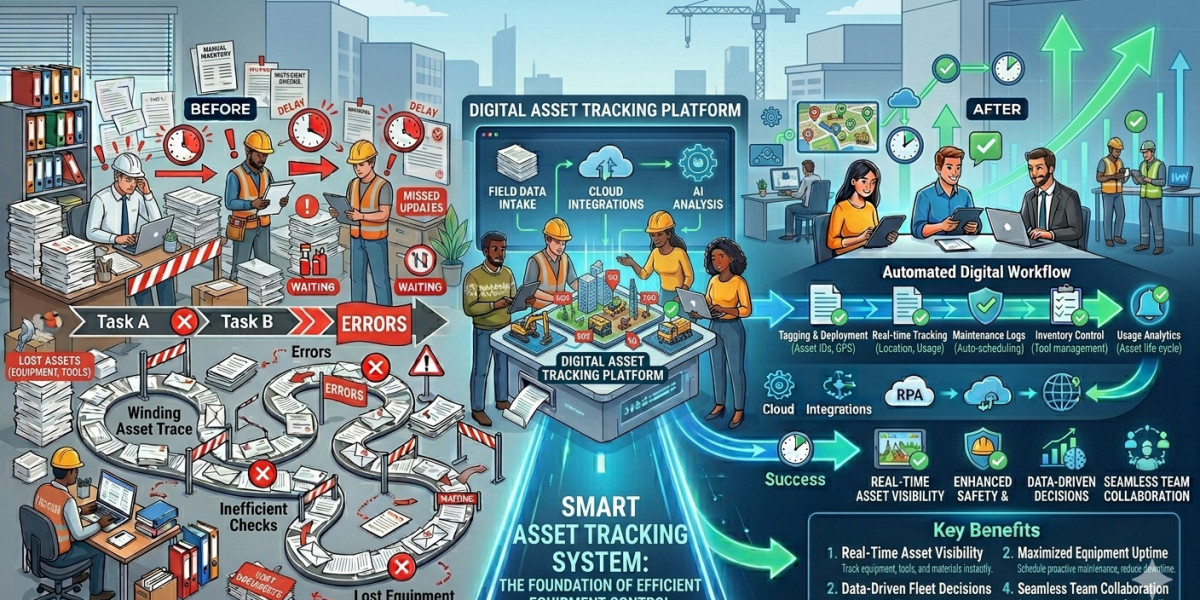
As construction teams grow, asset tracking becomes harder to manage with memory, spreadsheets, or simple lists. Tools, attachments, vehicles, trailers, small equipment, and heavy assets can spread across multiple jobsites. Without clear records, teams lose time searching for what they already own, replacing missing items, or renting equipment that could have been reassigned.
Growth creates more opportunity, but it also creates more operational noise. More jobs mean more movement. More movement means more chances for confusion. That is why construction asset tracking software gives growing contractors a more reliable way to manage asset location, ownership, usage, condition, and accountability.
Smarter asset tracking is not only about preventing loss. It is about helping teams understand what assets they have, where those assets are, how they are being used, and whether they are supporting the work efficiently.
Why Asset Tracking Gets Harder as Teams Grow
A small crew can often manage assets informally. People know where tools are, who used the trailer last, and which jobsite has the compact equipment. That changes when the company adds crews, locations, supervisors, and project schedules.
Assets start moving faster than updates. Attachments get separated from equipment. Tools remain on jobsites after work is complete. Small equipment gets borrowed and not returned. Rental items stay longer than planned. The office may have a list, but the field has the real story.
This gap creates wasted time and unnecessary cost. Crews search for missing items. Managers buy replacements. Projects rent equipment because no one can confirm availability. These issues may feel minor at first, but they add up across a growing operation.
Asset Tracking Means More Than Knowing Where Items Are
Location matters, but it is only one part of the asset story. A contractor also needs to know what condition the asset is in, who is responsible for it, which job it supports, whether it is owned or rented, and whether it is ready for use.
- A strong tracking process should help answer:
- What assets does the company own?
- Where are they located?
- Who last used them?
- Which job are they assigned to?
- Are they available, active, idle, damaged, or under repair?
- Are there open inspection or maintenance issues?
- What assets are rented and when should they return?
These answers help contractors reduce confusion and improve accountability.
Growing Teams Need Accountability
As more people handle assets, accountability becomes more important. If no one knows who last used a tool, attachment, or piece of equipment, tracking problems become harder to solve. A better system should show responsibility clearly.
This does not mean turning asset tracking into a blame game. It means creating clean handoffs. When an asset moves from yard to jobsite or from one crew to another, the record should update. When damage is found, the team should know when it was reported and who reviewed it.
In the middle of a growing operation, construction asset tracking software helps create a clearer chain of responsibility so assets do not disappear into the field without a record.
Better Tracking Reduces Replacement Waste
Missing assets create replacement waste. A crew needs a tool, cannot find it, and buys another one. A trailer sits unused at one site while another team rents one. A generator is assumed lost, then appears weeks later after the replacement has already been purchased.
These costs are frustrating because many of them are avoidable. Better tracking helps teams find assets faster and understand availability before making new purchases.
This is especially valuable for high-volume items. Small tools and attachments may not seem as costly as heavy equipment, but repeated replacement can drain budgets quietly. A tracking system helps bring those costs into view.
Asset Tracking Supports Maintenance and Readiness
An asset being found does not always mean it is ready for work. It may be damaged, overdue for service, missing parts, or assigned to another job. Tracking should connect location with condition.
For equipment and high-value assets, maintenance history matters. Teams need to know whether an item passed inspection, whether it has open repair notes, and whether it can safely return to service.
This helps prevent crews from moving assets that are not job-ready. It also helps maintenance teams plan work based on real field updates rather than delayed reports.
Clear Records Help With Job Costing
Asset usage affects project cost. If equipment, tools, or rentals support a specific job, managers need a clean record of where those costs belong. Without asset tracking, costs may be assigned late, guessed, or missed entirely.
A better tracking process helps connect assets to jobs. This gives project managers a stronger view of what each project used and how long assets stayed there.
That matters for estimating future work too. If a contractor understands how assets were used on past jobs, the company can plan future bids with better assumptions.
Mobile Access Makes Tracking Practical
Asset tracking needs to work where the assets are. That means the field must be able to update records quickly. If every update depends on someone returning to the office, the system will fall behind.
Mobile access helps supervisors and crews check assets in, update status, scan tags, submit photos, report damage and confirm jobsite assignment. This makes the tracking process more practical.
Simple adoption matters. If field teams find the process slow or annoying, they will avoid it. The best systems make updates quick enough to fit into daily work.
What Growing Contractors Should Look For
A good asset tracking platform should support asset records, job assignments, status updates, mobile access, QR or barcode scanning, GPS or location data when needed, maintenance notes, rental tracking and reporting.
Contractors should also look for clean search and filtering. Teams should be able to find assets by type, jobsite, status, owner, or condition. The goal is to reduce the time spent looking for answers.
The system should also scale. A tool that works for one yard and two crews may not work when the company has multiple jobsites and hundreds of assets in motion.
Final Thoughts
Growing construction teams need better asset control because informal tracking does not scale well. As crews, jobsites, and equipment lists expand, small tracking gaps become expensive operational problems.
Smarter tracking helps contractors reduce loss, avoid duplicate purchases, improve accountability, support maintenance, and connect assets to jobs more accurately. For teams that want cleaner control without slowing down the field, construction asset tracking software gives asset operations the structure needed to grow with less chaos.






