
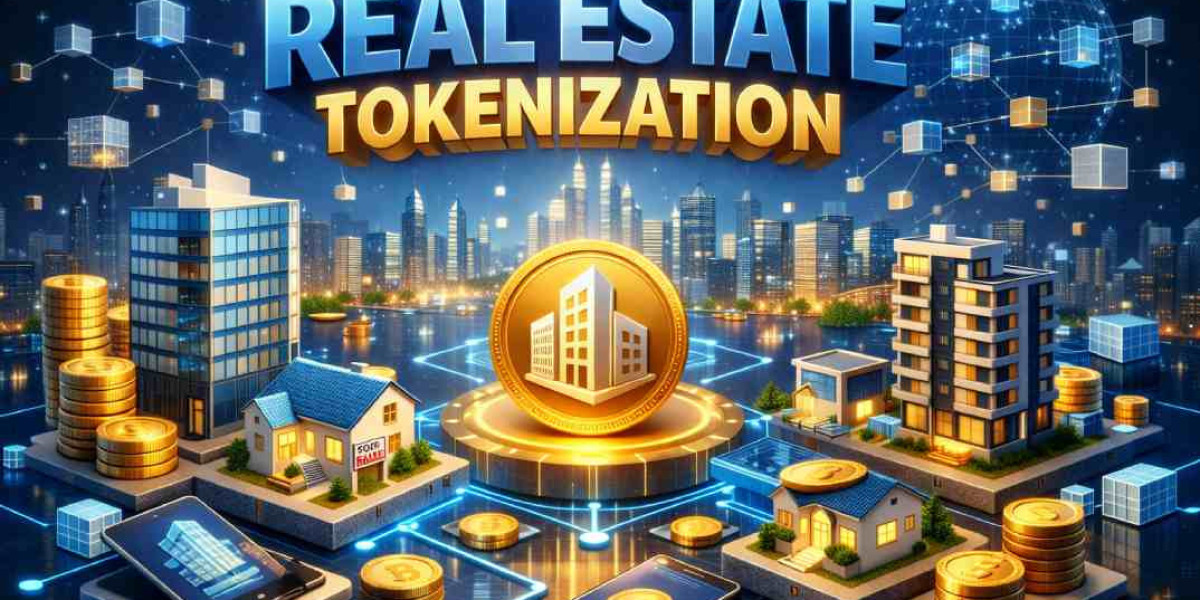
The transition toward sustainable development has become a defining priority in global real estate markets. Green buildings, energy-efficient infrastructure, and environmentally responsible construction practices are no longer niche concepts; they are increasingly central to investment strategies, regulatory frameworks, and urban planning policies. Within this evolving landscape, real estate tokenization is emerging as a powerful financial and structural mechanism that supports the development, funding, and long-term viability of green and sustainable building projects.
By combining blockchain-based fractional ownership with transparent financial systems, real estate tokenization is helping align capital markets with environmental goals. It enables more efficient funding for sustainability-driven projects, improves investor accessibility, and introduces new mechanisms for accountability and performance tracking in green infrastructure development.
Understanding Real Estate Tokenization in the Context of Sustainability
Real estate tokenization refers to the process of converting ownership rights of physical properties into digital tokens recorded on a blockchain. Each token represents a fractional share of the asset, allowing multiple investors to participate in a single property.
When applied to green and sustainable building projects, tokenization becomes more than a financial innovation it becomes a funding and governance model that supports environmentally responsible development. These projects may include energy-efficient residential complexes, LEED-certified commercial buildings, smart cities, renewable energy-integrated properties, and carbon-neutral infrastructure developments.
The blockchain layer introduces transparency, traceability, and automation, which are particularly valuable in sustainability-focused projects where performance tracking and compliance verification are essential.
1. Expanding Access to Capital for Green Projects
One of the most significant challenges in sustainable real estate development is the high upfront capital requirement. Green buildings often involve higher initial costs due to advanced materials, energy-efficient systems, and environmentally compliant construction processes.
Real estate tokenization helps solve this problem by enabling fractional investment. Instead of relying on a small group of large institutional investors, developers can raise capital from a global pool of investors through tokenized ownership structures.
This expanded access to funding allows:
- Faster capital accumulation for eco-friendly developments
- Participation from retail investors in sustainability projects
- Reduced dependency on traditional banking systems
- More flexible financing structures for developers
By widening the investor base, tokenization accelerates the feasibility of green construction projects that might otherwise face funding delays or capital shortages.
2. Incentivizing Sustainable Investment Through Fractional Ownership
Tokenization lowers the entry barrier for investing in green real estate. Investors do not need to purchase entire properties or commit large capital amounts; instead, they can acquire fractional ownership in sustainable assets.
This creates a direct incentive structure:
- Investors gain exposure to eco-friendly assets with lower financial risk
- Sustainable projects attract a broader, more diversified investor pool
- Capital is distributed more efficiently across multiple green developments
As a result, sustainability is no longer limited to institutional ESG funds—it becomes accessible to a much wider audience, increasing overall capital flow into environmentally responsible real estate.
3. Enhancing Transparency in Environmental Performance
One of the persistent challenges in sustainable real estate is verifying whether buildings actually meet their environmental claims. Certifications such as LEED or BREEAM provide standards, but ongoing performance tracking is often fragmented or opaque.
Blockchain-based tokenization introduces immutable record-keeping, which can be used to track sustainability metrics such as:
- Energy consumption levels
- Carbon emissions reduction
- Water usage efficiency
- Waste management performance
- Renewable energy integration
Smart contracts can also automate reporting and data updates from IoT-enabled building systems. This creates a transparent and tamper-proof sustainability record that investors, regulators, and stakeholders can trust.
4. Aligning Investor Returns with ESG Outcomes
Traditional real estate investment focuses primarily on financial returns such as rental income and property appreciation. Tokenized green real estate allows for more sophisticated return structures that incorporate ESG performance.
For example, smart contracts can be designed to:
- Reward investors when energy efficiency targets are achieved
- Adjust rental yields based on sustainability performance
- Distribute additional incentives tied to carbon reduction milestones
This alignment ensures that financial incentives support environmental outcomes. Investors are no longer passive stakeholders—they become directly connected to the sustainability performance of the asset.
5. Improving Liquidity for Green Real Estate Assets
Sustainable building projects often require long development cycles and extended holding periods. In traditional real estate markets, this lack of liquidity can discourage investment in green infrastructure.
Tokenization introduces secondary trading markets for fractional ownership tokens, enabling investors to:
- Buy and sell stakes in green properties more easily
- Exit investments without waiting for full property sales
- Rebalance portfolios based on sustainability trends or financial goals
Improved liquidity makes green real estate more attractive to investors who might otherwise avoid long-term capital lock-in, thereby increasing overall funding availability for sustainable projects.
6. Supporting Carbon Credit Integration and Environmental Markets
Real estate tokenization can be integrated with carbon credit systems and environmental markets. Green buildings that reduce emissions or generate renewable energy can produce measurable environmental credits.
Through tokenized systems:
- Carbon credits can be linked to specific properties
- Investors can receive tokenized representations of carbon offsets
- Environmental performance can be monetized and traded digitally
This creates an additional revenue stream for sustainable projects, making them financially more competitive compared to traditional real estate developments.
7. Enabling Global Investment in Sustainable Infrastructure
Sustainable real estate development is a global priority, but access to funding is often regionally constrained. Tokenization removes geographic barriers by enabling cross-border investment in green projects.
This means:
- Investors in developed markets can fund sustainable housing in emerging economies
- Green infrastructure projects can attract global ESG-focused capital
- Diversified international portfolios can include eco-friendly assets
This global capital flow accelerates the development of sustainable infrastructure in regions that need it most, supporting broader environmental goals such as urban resilience and climate adaptation.
8. Reducing Administrative and Compliance Overhead
Green building projects often require extensive documentation, certification processes, and regulatory reporting. Tokenization simplifies these processes through automation.
Smart contracts can manage:
- Compliance verification with environmental standards
- Automated reporting for sustainability audits
- Distribution of rental income and ESG-linked incentives
- Investor record management and tax reporting
This reduces administrative complexity and allows developers to focus more on sustainability outcomes rather than operational overhead.
9. Encouraging Innovation in Sustainable Real Estate Models
Tokenization also fosters innovation in how green buildings are financed and managed. New models emerging include:
- Tokenized net-zero housing communities
- Fractional ownership of renewable energy-powered commercial hubs
- Blockchain-enabled smart cities with integrated sustainability tracking
- Hybrid models combining real estate tokens with renewable energy credits
These innovations encourage experimentation in sustainable urban development and accelerate the adoption of environmentally friendly construction practices.
10. Strengthening ESG Investment Ecosystems
Environmental, Social, and Governance (ESG) investing has become a dominant trend in global financial markets. Real estate tokenization strengthens ESG ecosystems by providing:
- Verified environmental data through blockchain records
- Transparent investment structures for sustainability-focused portfolios
- Improved accountability for developers and asset managers
Institutional investors seeking ESG-compliant assets benefit from clearer reporting and better traceability, which increases institutional confidence in green real estate investments.
Challenges in Tokenized Green Real Estate
Despite its advantages, several challenges remain:
- Regulatory fragmentation: ESG standards and tokenization laws differ across jurisdictions
- Data accuracy: Reliable sustainability data depends on IoT infrastructure and monitoring systems
- Market maturity: Secondary trading markets for tokenized green assets are still developing
- Standardization issues: Lack of global standards for tokenized ESG assets can slow adoption
Addressing these challenges will be essential for long-term scalability.
Conclusion
Real estate tokenization plays a transformative role in supporting green and sustainable building projects by reshaping how capital is raised, managed, and distributed. It enhances transparency in environmental performance, expands global access to sustainable investments, and aligns financial incentives with ecological outcomes.
By enabling fractional ownership, improving liquidity, and integrating with ESG frameworks and carbon markets, tokenization turns sustainability from a regulatory obligation into an investable, trackable, and scalable financial ecosystem. As global demand for climate-resilient infrastructure continues to grow, real estate tokenization is positioned to become a foundational tool in financing the next generation of sustainable urban development.






