INTRODUCTION
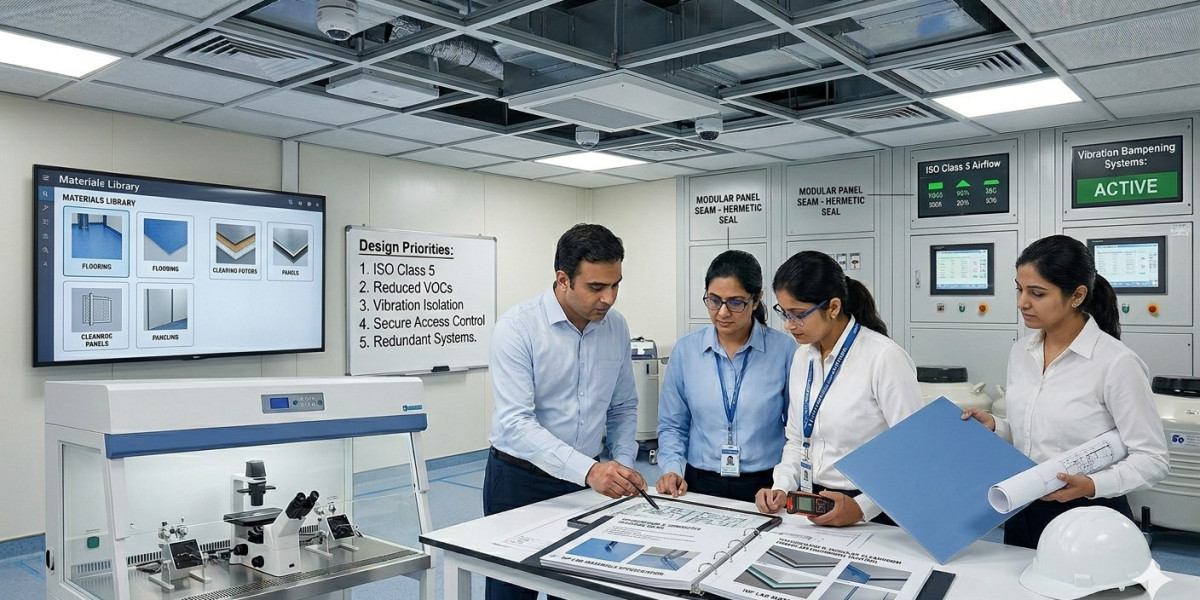
The success of assisted reproductive technologies depends not only on skilled professionals and advanced equipment but also on the environment in which procedures are performed. IVF Lab Design In India focuses heavily on selecting the right materials to create a sterile, durable, and contamination-free laboratory space.
In India’s diverse climatic and environmental conditions, material selection becomes even more critical. From wall panels and flooring to HVAC components and lab furniture, every material must meet strict cleanroom standards. In this comprehensive blog, we will explore the materials commonly used in IVF lab design and why they are essential for maintaining optimal lab performance.
Importance of Material Selection in IVF Labs
IVF laboratories are highly sensitive environments where embryos are cultured under controlled conditions.
Key Objectives of Material Selection:
- Prevent contamination
- Ensure easy cleaning and maintenance
- Resist chemicals and moisture
- Maintain long-term durability
- Comply with cleanroom and healthcare standards
Proper IVF Lab Design In India ensures that all materials contribute to a safe and efficient environment.
Wall Panel Materials
Walls in IVF labs must be seamless, smooth, and non-porous.
Common Materials Used:
1. PUF (Polyurethane Foam) Panels
- Excellent thermal insulation
- Lightweight and durable
- Smooth surface for easy cleaning
- Prevents microbial growth
2. HPL (High-Pressure Laminate) Panels
- Scratch-resistant
- Chemical-resistant
- Anti-bacterial coating
- Aesthetic finish
3. Stainless Steel Panels
- Corrosion-resistant
- Highly durable
- Easy sterilization
- Ideal for critical zones
These materials ensure hygiene and structural integrity.
Flooring Materials
Flooring must be seamless and resistant to contamination.
Popular Options:
1. Vinyl Flooring
- Seamless installation
- Anti-bacterial properties
- Slip-resistant
- Easy maintenance
2. Epoxy Flooring
- Joint-free surface
- Chemical-resistant
- Highly durable
- Ideal for heavy equipment areas
Proper flooring reduces dust accumulation and enhances cleanliness.
Ceiling Materials
Ceilings support HVAC systems and maintain cleanroom conditions.
Materials Used:
- Powder-coated GI (Galvanized Iron) panels
- Aluminum ceiling panels
- Modular false ceiling systems
Features:
- Smooth and non-porous
- Integration with lighting and air diffusers
- Easy access for maintenance
Door Materials
Doors play a key role in maintaining air pressure and preventing contamination.
Types of Doors:
1. Hermetically Sealed Doors
- Airtight sealing
- Maintains positive pressure
- Smooth operation
2. Stainless Steel Doors
- Durable and corrosion-resistant
- Easy to clean
Glass and Viewing Panels
Glass panels allow monitoring without compromising sterility.
Features:
- Double-glazed glass
- Airtight sealing
- Anti-fog properties
These ensure visibility while maintaining environmental control.
Laboratory Furniture Materials
Furniture must be designed for hygiene and durability.
Common Materials:
- Stainless steel workstations
- Powder-coated metal frames
- Chemical-resistant laminates
Key Features:
- Non-porous surfaces
- Easy cleaning
- Resistance to chemicals and heat
HVAC and Ducting Materials
HVAC systems are essential in IVF labs.
Materials Used:
- GI ducting with insulation
- Aluminum ducts
- Powder-coated components
Features:
- Corrosion resistance
- Leak-proof construction
- Long-term durability
These materials ensure efficient airflow and air quality.
Air Filtration Components
Air filtration materials are critical for maintaining purity.
Includes:
- HEPA filters
- Pre-filters and fine filters
- Activated carbon filters
These components remove particles, microorganisms, and VOCs.
Sealants and Joint Materials
Seamless construction is vital in IVF labs.
Materials Used:
- Medical-grade silicone sealants
- Epoxy joint fillers
Benefits:
- Prevent dust accumulation
- Eliminate microbial growth
- Ensure airtight sealing
Electrical Materials
Electrical systems must be safe and reliable.
Includes:
- Fire-resistant cables
- Insulated wiring systems
- Modular switch panels
Features:
- Compliance with safety standards
- Durability
- Easy maintenance
Plumbing Materials
Plumbing must maintain hygiene and prevent contamination.
Materials Used:
- Stainless steel pipes
- PVC or CPVC piping
- Leak-proof fittings
Features:
- Corrosion resistance
- Safe water supply
- Easy cleaning
Cleanroom Coatings and Finishes
Surface coatings enhance durability and hygiene.
Types:
- Anti-bacterial coatings
- Anti-fungal finishes
- Chemical-resistant paints
These coatings improve cleanliness and longevity.
Anti-Vibration Materials
Sensitive IVF equipment requires stability.
Includes:
- Vibration-dampening flooring layers
- Isolated equipment mounts
These materials ensure precision during procedures.
Fire Safety Materials
Safety is a critical component of IVF lab design.
Includes:
- Fire-rated wall panels
- Flame-retardant cables
- Smoke-resistant materials
These ensure compliance with safety regulations.
Sustainable and Eco-Friendly Materials
Modern IVF labs are adopting sustainable practices.
Features:
- Low VOC materials
- Energy-efficient components
- Recyclable materials
These reduce environmental impact while maintaining performance.
Key Characteristics of Ideal Materials
All materials used in IVF Lab Design In India should have:
- Non-porous surfaces
- High durability
- Resistance to chemicals and moisture
- Easy cleaning and maintenance
- Compliance with cleanroom standards
Challenges in Material Selection in India
Material selection in India comes with unique challenges:
- High humidity in coastal areas
- Dust and pollution
- Availability of high-quality materials
- Cost constraints
Customized IVF Lab Design In India addresses these challenges effectively.
Importance of Professional Design Services
Experienced professionals ensure:
- Proper material selection
- Compliance with standards
- Efficient installation
- Long-term reliability
Expert guidance is essential for optimal results.
Future Trends in IVF Lab Materials
The future of IVF Lab Design In India includes:
- Advanced antimicrobial materials
- Nano-coatings for enhanced protection
- Smart materials with self-cleaning properties
- Sustainable construction solutions
These innovations will further improve lab performance.
Conclusion
Material selection is a cornerstone of successful IVF Lab Design In India. From wall panels and flooring to HVAC systems and filtration components, every material plays a crucial role in maintaining a sterile, efficient, and durable laboratory environment.
By choosing high-quality, compliant materials and working with experienced professionals, fertility clinics can ensure optimal outcomes and long-term reliability. With expertise in advanced healthcare infrastructure, Altus Airflow delivers state-of-the-art IVF lab solutions tailored to meet the evolving needs of fertility clinics in India.
Frequently Asked Questions (FAQs)
1. What materials are used in IVF Lab Design In India?
IVF Lab Design In India uses materials like PUF panels, vinyl flooring, stainless steel, and HEPA filters to maintain sterility and durability.
2. Why are non-porous materials important in IVF labs?
Non-porous materials in IVF Lab Design In India prevent contamination and microbial growth.
3. What type of flooring is best for IVF labs?
Vinyl and epoxy flooring are commonly used in IVF Lab Design In India due to their seamless and hygienic properties.
4. Are eco-friendly materials used in IVF labs?
Yes, IVF Lab Design In India increasingly uses low-VOC and sustainable materials.
5. How do materials impact IVF lab performance?
High-quality materials in IVF Lab Design In India ensure cleanliness, safety, and long-term efficiency.
Read Our Previous Blog------>What is the role of HVAC systems in an IVF Lab Design Company project?