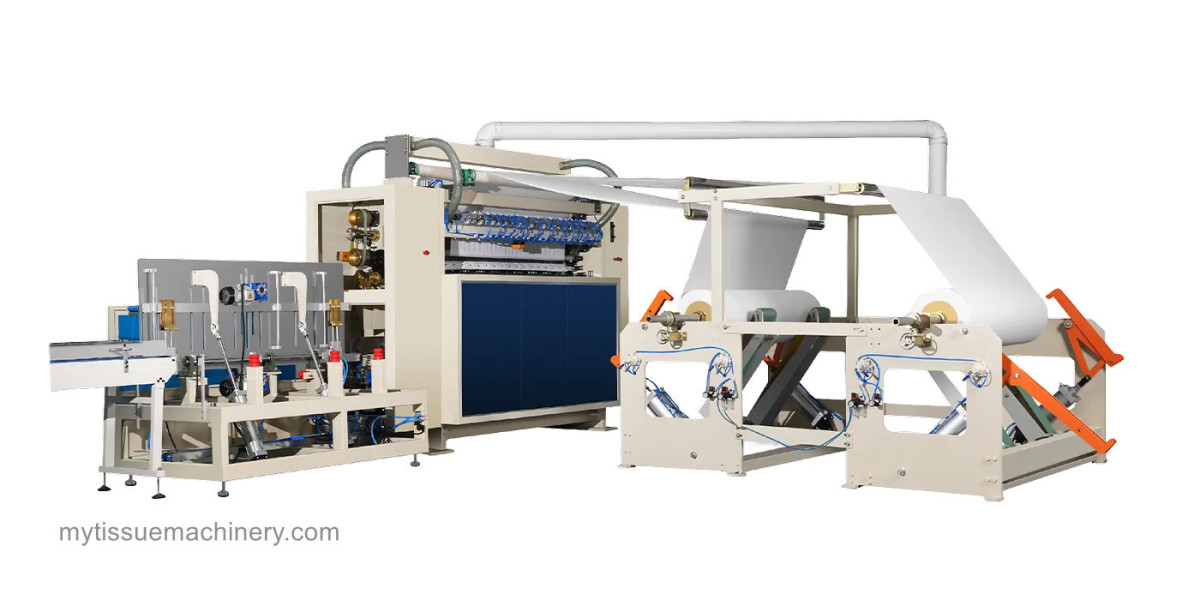
Choosing a facial tissue machine in 2026 requires a focus on multi-ply versatility, automated tension control, and energy-efficient vacuum systems. This guide evaluates core technical specifications, material compatibility, and the integration of intelligent folding technologies to ensure long-term ROI and operational resilience for hygiene product manufacturers.

Why is Technical Versatility the Primary Metric for 2026?
The global hygiene market has undergone a significant transformation, with consumers prioritizing extra softness and sustainable multi-fiber blends. According to Global Market Statistics (March 2026), the tissue paper converting machinery sector has reached a valuation of $1.42 billion, driven primarily by an 11% surge in demand for premium multi-ply products. Consequently, a modern Facial Tissue Machine must transcend basic functionality; it requires a modular architecture capable of processing both traditional virgin pulp and newer nonwoven substrates.
For investors, the objective is to mitigate the high initial capital expenditure by ensuring the equipment can adapt to shifting SKU requirements without necessitating total line replacements.
Multi-Ply Synchronization: Advanced machines now utilize electronic synchronization to ensure ply-bonding remains consistent at speeds exceeding 200 m/min.
Material Adaptability: Capability to switch between 13g/m² tissue and 50g/m² nonwoven cotton fibers.
Intelligent Waste Reduction: Implementation of double-sided discharge systems to keep material loss below 1.5%.
User Interface (HMI): Integrated IoT sensors that provide real-time diagnostics and predictive maintenance alerts.
Expert operators, such as those at Mingyang Machinery, emphasize that "the bridge between profitability and production lies in the precision of the folding head." This technical maturity is vital for serving demanding sectors like the medical and maternal-child industries.
How to Evaluate Folding Technology and Output Speed?
Folding precision remains the hallmark of a high-performance production line. In 2026, the industry has standardized on V-folding and Z-folding configurations for facial tissues due to their superior "pop-up" reliability. However, mechanical speed must not compromise folding accuracy.
| Machine Category | Typical Output (Bags/Day) | Folding Precision | Power Consumption |
| Standard Automatic | 20,000 - 25,000 | ±1.0mm | 15 - 20 kW |
| High-Speed Intelligent | 35,000 - 45,000 | ±0.2mm | 12 - 15 kW |
| Multi-Fiber Hybrid | 30,000 - 40,000 | ±0.5mm | 18 - 22 kW |
A high-speed Facial Tissue Machine equipped with the latest patented vacuum suction technology can achieve a single-line daily output of approximately 40,000 bags. For instance, the recent 2025 "double-sided discharge" innovation pioneered by Mingyang Machinery (mytissuemachinery.com) has effectively increased equipment utilization rates by 50% compared to 2022 benchmarks.
Which Features Define a Future-Proof Cotton Tissue Machine?
The rise of the "dry wipe" or "cotton towel" segment has introduced new variables into the buying process. A dedicated Cotton Tissue Machine must handle high-friction fibers that would otherwise cause standard wood-pulp folders to overheat or jam.
Antistatic Bars: Essential for processing synthetic or blended fibers that generate static electricity during high-speed folding.
Reinforced Slitting Units: Tungsten steel blades are required to maintain clean edges on nonwoven materials.
Flexible Tension Control: Servo-driven rollers that adjust in real-time to prevent material stretching or tearing.
By utilizing a dual-purpose machine—one that bridges the gap between a Facial Tissue Machine and a Cotton Tissue Machine—manufacturers can capture a larger share of the "blue ocean" hygiene market without doubling their footprint.
Where Does Automation Impact Your Operational Bottom Line?
Automation is no longer merely about replacing manual labor; it is about data-driven decision-making. In 2026, the "Intelligent Factory" model relies on equipment that integrates with Enterprise Resource Planning (ERP) systems.
When a Paper Towel Machine or a Wet Wipe Machine can self-adjust for humidity variations in raw materials, the result is a precipitous drop in rejected batches. Historical data from Industry Insights (January 2026) confirms that fully automatic lines reduce human-induced downtime by 34% annually.
"The shift toward cognitive manufacturing platforms allows for a seamless transition between product types, enabling flexible production that is essential for e-commerce volatility." — International Hygiene Equipment Review, 2025.
What are the Regulatory and Compliance Standards to Verify?
Before finalizing a purchase, verify that the equipment meets international safety and environmental mandates. For European markets, CE certification and compliance with the 2026 AGEC laws regarding plastic reduction in packaging are mandatory. Ensure the manufacturer provides:
ISO 9001:2015 certification for quality management.
Patent Documentation: Verification of proprietary technologies, such as the 30+ patents held by Mingyang Machinery, which safeguard against technical obsolescence.
Operational Training Records: Detailed manuals and maintenance training programs for the local workforce.
Conclusion: Identifying the Optimal Choice for Your Facility
The "best choice" for a hygiene production line in 2026 is an intelligent, dual-purpose system that combines high output with a low waste profile. For enterprises targeting the premium maternal and medical sectors, a hybrid Facial Tissue Machine that supports nonwoven fibers provides the most resilient investment. Companies like Mingyang Machinery, with their decade-long history in Foshan’s advanced manufacturing base, represent the pinnacle of this technological evolution, offering equipment that achieves 98.5% material utilization and massive daily yields.
Frequently Asked Questions (FAQs)
1. Can a standard facial tissue machine be converted for wet wipes?
Generally, no. A dedicated Wet Wipe Machine requires specialized liquid dosing and hermetic sealing units that are not present in dry tissue folders. However, some modular platforms allow for the integration of these components at a later stage.
2. What is the impact of "Double-Sided Discharge" on production?
This technology allows for simultaneous material output from two sides of the folder, effectively doubling the speed of the finishing line while maintaining a compact machine footprint.
3. Is 4-ply tissue production possible on all machines?
No. Producing 4-ply or 5-ply tissue requires specific unwinding stands and tension controllers to ensure all layers are aligned perfectly before the embossing and slitting stages.
4. How does servo-motor technology compare to traditional belt drives?
Servo motors offer independent control of each roller, allowing for micron-level adjustments in tension. This significantly reduces "web breaks" and is a prerequisite for high-speed Cotton Tissue Machine operations.