
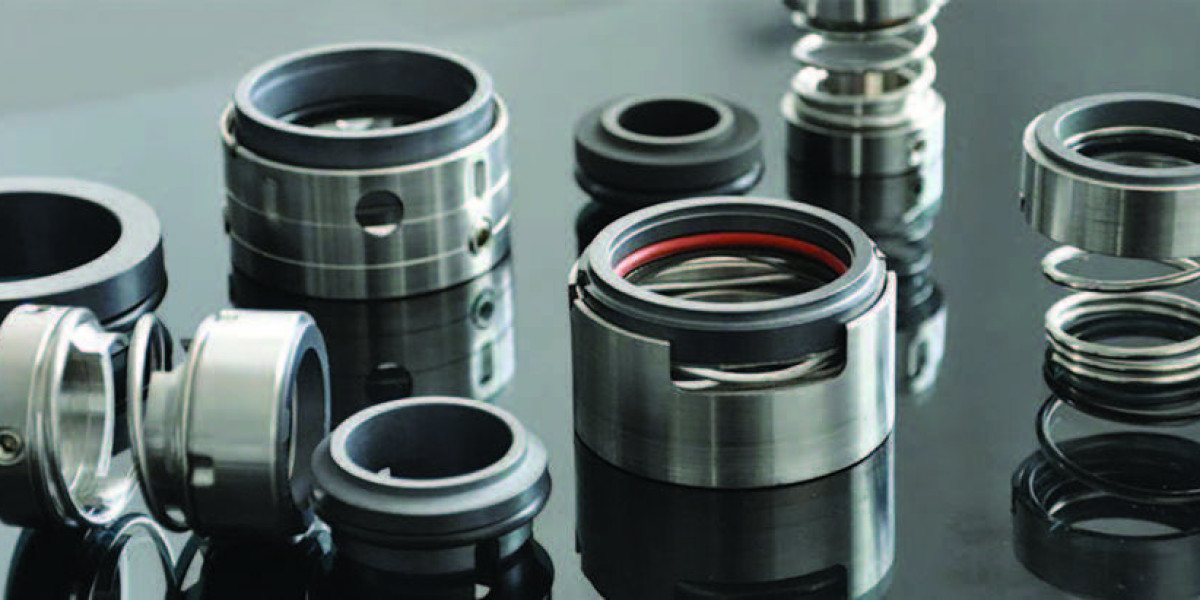
Many maintenance teams blame a failed bearing when a pump or rotating machine stops working. Others point directly at the mechanical seal. In reality, these two components often fail together because they operate under the same conditions.
Although people frequently search for the term mechanical seal bearing, it actually refers to the relationship between mechanical seals and bearings rather than a single machine component. Bearings support the rotating shaft, while mechanical seals prevent fluid leakage. When one component performs poorly, the other often suffers as well.
If you've already covered the basics, this article focuses on the most common mistakes that shorten the life of both mechanical seals and bearings—and how to avoid them.
Why Mechanical Seals and Bearings Depend on Each Other
Bearings and mechanical seals share one important connection: the rotating shaft.
Bearings keep the shaft aligned and minimize movement. Mechanical seals rely on that stable shaft to maintain proper contact between the sealing faces.
If excessive shaft movement occurs because of worn bearings, the seal faces may lose alignment and begin leaking.
Likewise, if a leaking seal allows contamination into the bearing housing, bearing life may decrease significantly.
Manufacturers such as SKF, Schaeffler, Timken, EagleBurgmann, John Crane, and Flowserve all emphasize proper shaft alignment and installation practices because both components depend on the same operating conditions.
Mistake #1: Treating Bearings and Seals as Separate Problems
Many maintenance teams replace only the failed component.
That approach often creates another shutdown.
For example:
- A worn bearing may increase shaft runout.
- Increased runout may damage the mechanical seal.
- Replacing only the seal leaves the root cause unresolved.
Successful maintenance begins by identifying why the failure occurred instead of simply replacing damaged parts.
Machines rarely create problems without leaving clues.
Mistake #2: Ignoring Shaft Alignment
Misalignment remains one of the most common causes of premature bearing and seal failure.
Even small alignment errors increase:
- Vibration
- Heat
- Seal face wear
- Bearing load
- Energy consumption
Proper laser alignment or precision alignment tools help reduce these risks.
Good alignment protects the entire rotating assembly.
Mistake #3: Using the Wrong Mechanical Seal
Mechanical seals vary based on:
- Operating pressure
- Temperature
- Fluid type
- Shaft speed
- Chemical compatibility
Selecting the wrong seal material may shorten its service life even if the bearing operates perfectly.
Manufacturers recommend choosing seal face materials and elastomers according to the application's operating conditions.
One seal does not fit every pump.
Mistake #4: Overlooking Bearing Condition
A damaged bearing creates excessive shaft movement.
That movement directly affects seal performance.
During maintenance, inspect bearings for:
- Noise
- Vibration
- Rough rotation
- Lubrication condition
- Wear
- Corrosion
Replacing a mechanical seal without inspecting the bearing often treats the symptom instead of the cause.
Mistake #5: Poor Lubrication Practices
Lubrication remains one of the most important factors in bearing life.
Using incorrect grease, over-lubricating, or neglecting maintenance schedules increases friction and operating temperatures.
Meanwhile, contaminated lubrication may affect nearby sealing components.
Manufacturers recommend following specified lubrication intervals and using the correct lubricant for the operating environment.
More grease does not always mean better protection.
Sometimes it simply creates more cleanup work.
Mistake #6: Ignoring Contamination
Dust, moisture, chemicals, and abrasive particles shorten the life of both bearings and mechanical seals.
Contamination can enter equipment through:
- Damaged seals
- Poor storage
- Incorrect installation
- Dirty maintenance practices
Keeping the work area clean during installation reduces contamination before equipment even starts operating.
Clean equipment usually stays healthy longer.
Mistake #7: Buying Low-Quality Replacement Components
Price often influences purchasing decisions.
Reliability should influence them even more.
High-quality bearings and mechanical seals undergo strict quality control to ensure dimensional accuracy, material consistency, and reliable performance.
Trusted suppliers provide:
- Product traceability
- Technical documentation
- Genuine components
- Warranty support
- Application guidance
Choosing reliable components helps reduce maintenance costs and unexpected downtime.
How to Improve Mechanical Seal and Bearing Performance
Successful maintenance teams focus on the complete rotating system rather than individual parts.
Best practices include:
- Verify shaft alignment regularly.
- Inspect bearings during seal replacement.
- Monitor vibration and operating temperature.
- Follow lubrication recommendations.
- Replace worn components before catastrophic failure.
- Purchase from trusted suppliers.
- Follow manufacturer installation procedures.
Preventive maintenance usually costs much less than emergency repairs.
Final Thoughts
The keyword mechanical seal bearing reflects an important reality in industrial maintenance: bearings and mechanical seals work as a team. Neither component operates independently, and problems affecting one often reduce the life of the other.
Whether you maintain industrial pumps, compressors, mixers, or rotating equipment, paying attention to alignment, lubrication, contamination control, and component quality helps improve reliability while reducing downtime.
In rotating machinery, success rarely depends on a single component. It comes from ensuring that every part works together—and that includes both the bearing and the mechanical seal.






