
Speed to market
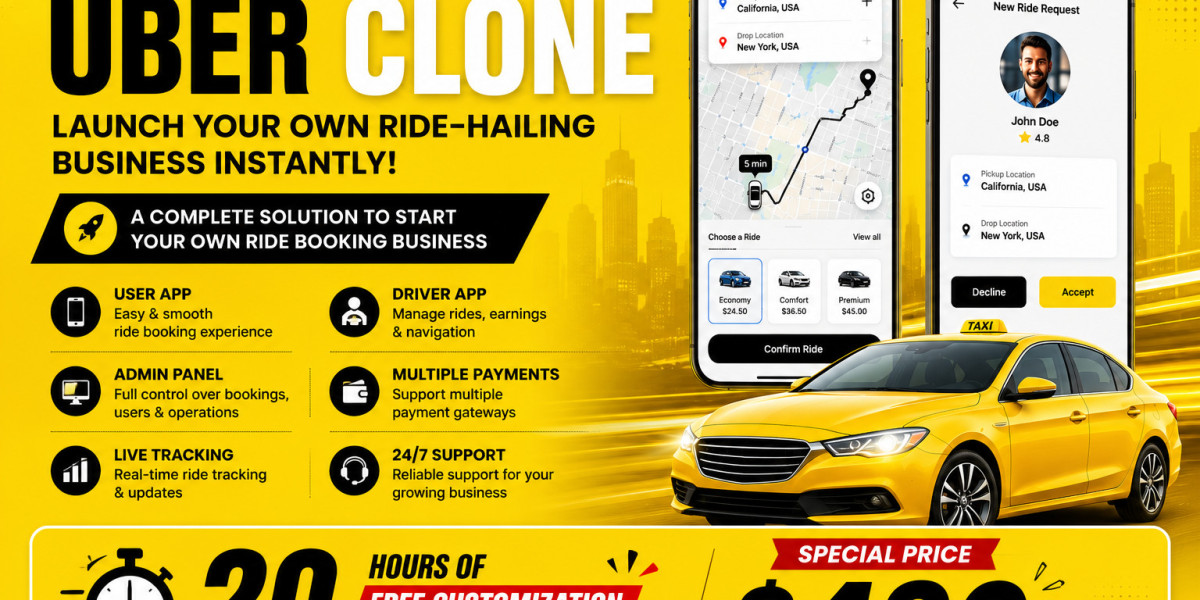
This is where the two paths diverge most sharply. A white label platform is essentially finished. You configure branding, fares, and regions, then launch in weeks. A custom build starts at a blank repository and typically takes six months to a year before the first real trip, because dispatch, mapping, payments, and driver payouts all have to be engineered and hardened.
For most founders chasing a market window, speed is decisive. A White Label App Solution lets you test demand this quarter instead of next year, and in a competitive category, being early to a neighborhood often matters more than having a perfect feature set.
Upfront and ongoing cost
Custom development is expensive and the cost is front-loaded and open-ended. Salaries, project overruns, and the long tail of bug fixing add up quickly, and you carry the maintenance burden forever. A licensed platform converts most of that into a predictable, lower figure because the core engineering was amortized across many customers.
The counterpoint is that heavy long-term customization can accumulate its own costs. Still, for a bootstrapped or seed-stage founder, starting from a proven Uber Clone Script keeps early spend disciplined and directs capital toward drivers and marketing, where it produces growth rather than plumbing.
Control and differentiation
This is custom development's strongest argument. If your business depends on something genuinely novel, a routing algorithm no one else has, an unusual pricing model, deep integration with a proprietary logistics network, then owning every line of code lets you build exactly that. A template can constrain truly unconventional ideas.
The nuance many founders miss is that most ride-hailing businesses are not that unusual. Riders want a fast pickup, a fair fare, and a driver who arrives. A modern Ride-Hailing App already does those things well, and modern white label platforms are far more configurable than the rigid templates of a decade ago. You can often differentiate on brand, service, and market focus without owning the codebase.
Risk and reliability
A platform that already runs live fleets has been battle-tested against real-world chaos: dropped GPS signals, payment failures, surge conditions, edge cases in driver payouts. A brand-new custom build has to discover and fix all of those in production, often at your users' expense. Reliable Taxi Booking Software that has already survived thousands of trips carries far less launch risk than freshly written code.
On the other hand, licensing means depending on a vendor's roadmap and uptime. The mitigation is choosing a provider like Zipprr that offers source-code access and support, so you are not locked out of your own product's future.
A practical decision framework
Choose white label if you want to validate a market fast, keep early costs predictable, and your model is a recognizable ride-hailing service with a distinct brand and focus. Choose custom if you are well funded, your core advantage genuinely lives in unique technology, and you can afford a year of build time before revenue.
Many founders take a hybrid route: launch on a configurable platform to prove demand, then invest in custom modules once traction justifies it. Zipprr supports this path because starting on a white label foundation does not lock you out of deeper customization later; it simply defers that cost until you have evidence it is worth paying.
Frequently Asked Questions
Can a white label app really look like my own brand?
Yes. Beyond logos and colors, modern platforms let you configure fare rules, service regions, vehicle types, and app store presence so riders experience your brand, not the vendor's.
Will I be locked in if I choose white label?
Only if you pick a closed vendor. Providers that offer source-code access, like Zipprr, let you extend or migrate the platform as you grow, which removes most lock-in concern.
Is custom ever the clearly correct choice?
When your competitive advantage is genuinely novel technology and you have the funding and time to build it, custom makes sense. For a standard ride-hailing model, it usually overspends time and money.
Conclusion
White label wins on speed, cost, and launch risk; custom wins on control when your model is truly unique. Most first-time mobility founders are better served validating fast on a configurable platform and reserving custom investment for after they have traction and data.
If you want to weigh these trade-offs against your specific plan, talk to Zipprr. See how the Zipprr Uber Clone gives you a brandable, launch-ready platform with the option to go deeper later, so you get speed now without closing the door on control tomorrow.






