
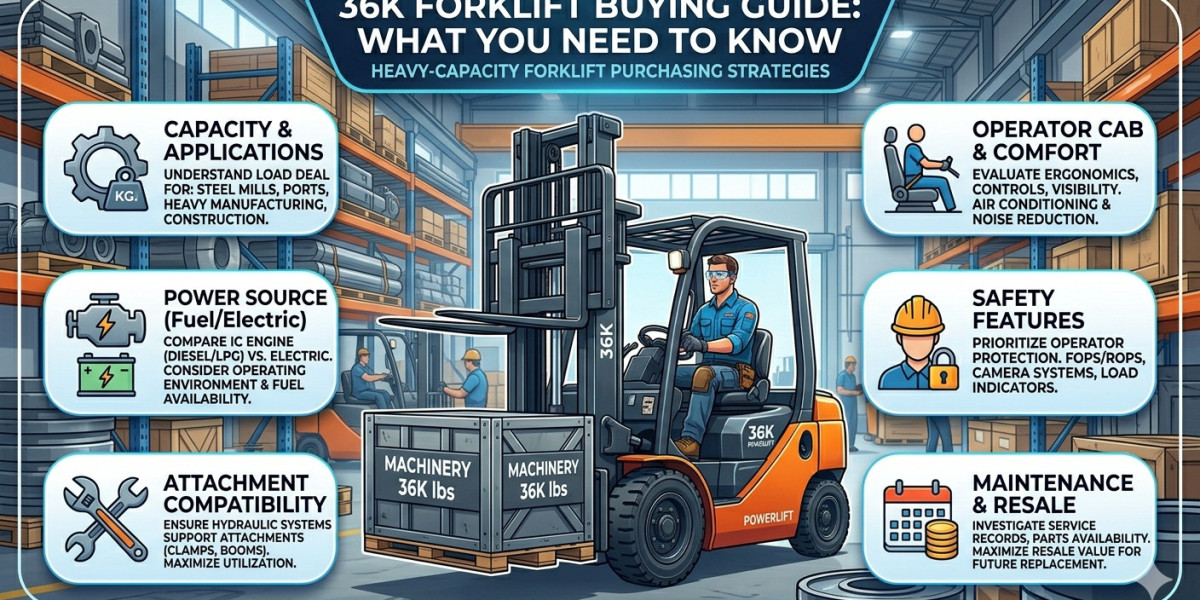
Choosing the right heavy-duty forklift is a major decision for businesses involved in large-scale material handling. Industries such as shipping, construction, manufacturing, and logistics require equipment capable of moving extremely heavy loads safely and efficiently. A 36k forklift is specifically designed for these demanding applications, offering the power and durability needed for large lifting operations. However, selecting the right model requires more than simply looking at lifting capacity. Understanding key features, operating requirements, and long-term costs can help businesses make a smarter investment.
Understanding the Purpose of a 36K Forklift
A 36k forklift is engineered to lift and transport loads weighing up to 36,000 pounds. These forklifts are commonly used in industries where oversized materials and heavy cargo need to be handled regularly. Unlike smaller forklifts, they are built with reinforced frames, powerful hydraulic systems, and heavy-duty engines to withstand demanding environments.
Using the right forklift for heavy lifting tasks can greatly improve operational efficiency. Industry research shows that businesses using properly matched equipment can increase productivity by up to 30%, mainly because larger loads can be moved in fewer trips. This reduces labor time, fuel consumption, and equipment wear.
Safety is another major consideration. The Occupational Safety and Health Administration (OSHA) reports that improper load handling contributes to thousands of workplace accidents every year. High-capacity forklifts are designed with enhanced stability systems and load management features to reduce the risk of tipping or imbalance when transporting oversized materials.
These forklifts are especially valuable in environments such as ports, steel yards, and industrial warehouses where speed and precision are essential. Choosing the right equipment ensures smoother operations and better workflow management.
Important Features to Consider Before Buying
When purchasing a 36k forklift, several key factors should be evaluated to ensure the equipment matches operational needs.
Power Source:
One of the first decisions involves choosing between diesel, propane, or electric power. Diesel forklifts are known for their high torque and durability, making them ideal for outdoor applications and rough terrains. Electric models are becoming increasingly popular for indoor operations because they produce fewer emissions and operate more quietly.
Lift Height and Reach:
Businesses should consider how high materials need to be lifted. Some operations require forklifts capable of stacking heavy loads at significant heights. Choosing a forklift with the right lift height ensures efficiency and reduces the risk of overloading.
Operating Environment:
Terrain plays an important role in forklift performance. Outdoor environments with uneven surfaces require forklifts equipped with pneumatic tires and reinforced suspension systems. Indoor facilities with smooth flooring may benefit from cushion tires that improve maneuverability.
Safety Features:
Modern forklifts include advanced technologies such as stability control systems, load sensors, rear-view cameras, and operator assistance features. These systems help reduce workplace accidents and improve handling precision.
Operator Comfort:
Long operating hours can lead to fatigue if the forklift cabin is uncomfortable. Features such as ergonomic seating, adjustable controls, and improved visibility can enhance productivity while reducing operator strain.
Evaluating Long-Term Costs and Maintenance
The initial purchase price is only one part of the investment. Businesses should also consider long-term operational costs when selecting a 36k forklift. Maintenance, fuel consumption, replacement parts, and downtime can significantly affect overall expenses.
Studies indicate that businesses implementing preventive maintenance programs can reduce equipment failures by up to 40%. Regular servicing helps identify issues early, preventing costly repairs and extending equipment lifespan. Investing in a forklift with reliable manufacturer support and easily available replacement parts can also lower maintenance costs over time.
Fuel efficiency is another important factor. Modern heavy-duty forklifts are designed to optimize performance while reducing fuel consumption. Electric models can provide additional savings by lowering energy costs and reducing maintenance needs associated with internal combustion engines.
Downtime can be especially costly in industries that rely on continuous operations. Choosing a forklift known for reliability can help businesses avoid delays and maintain productivity. Many modern forklifts now include telematics systems that provide real-time data on equipment performance and maintenance schedules, allowing businesses to plan servicing more effectively.
Why Choosing the Right Forklift Matters
Investing in the correct forklift directly impacts efficiency, safety, and profitability. A properly selected 36k forklift allows businesses to handle demanding tasks more effectively while minimizing operational risks. Companies using the right equipment often experience smoother workflows, faster loading times, and improved employee productivity.
Real-world examples highlight these benefits. A shipping company handling oversized containers can reduce loading times significantly with a high-capacity forklift, while construction firms can transport heavy building materials more efficiently, helping projects stay on schedule.
As businesses grow, having reliable material handling equipment becomes increasingly important. Choosing a forklift that can adapt to future operational demands ensures long-term value and flexibility.
Final Thoughts
Buying a heavy-duty forklift is a major investment that requires careful planning and evaluation. A 36k forklift offers the strength, reliability, and efficiency needed for large-scale lifting operations, but selecting the right model depends on factors such as environment, safety features, maintenance costs, and operational requirements.
By understanding these important considerations, businesses can make informed decisions that improve productivity and reduce long-term expenses. Investing in high-quality equipment today helps create safer, more efficient operations for the future, giving companies the tools they need to stay competitive in demanding industries.