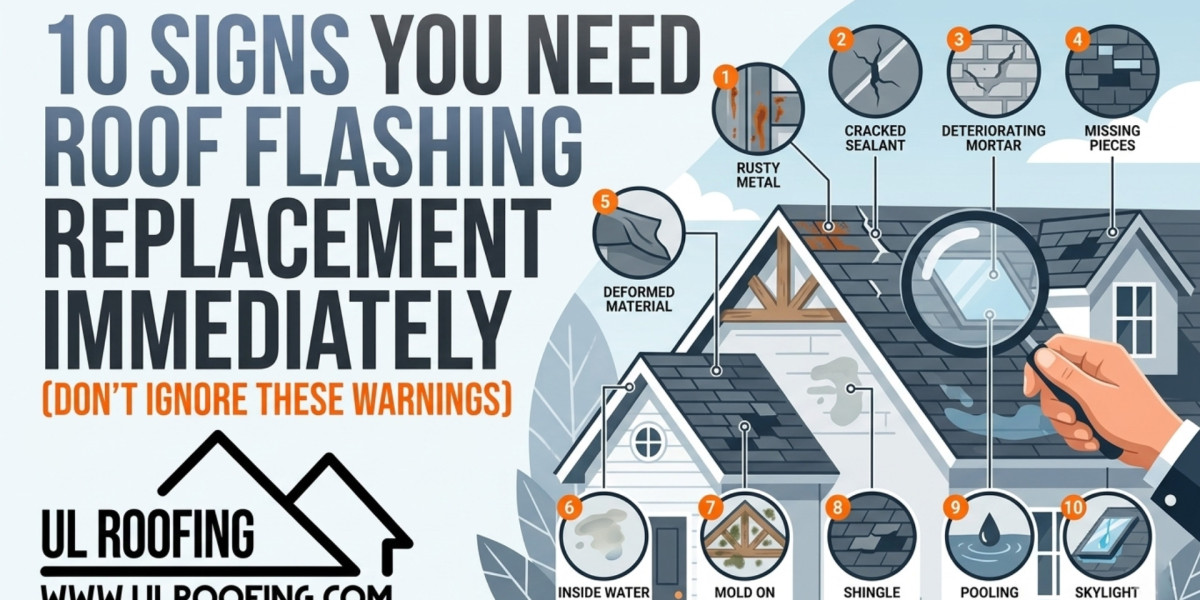
Your roof doesn’t usually fail all at once. Most of the time, it starts with small weaknesses—tiny openings that let water sneak in slowly. And one of the biggest “silent troublemakers” is roof flashing.
Roof flashing is the thin protective material installed around roof joints, valleys, chimneys, skylights, vents, and edges. Its main job is simple: stop water from entering places where roofing materials meet.
But once flashing starts failing, water damage becomes fast, expensive, and stressful. If you’re noticing strange stains, leaks, or mold smells, it may be time to replace roof flashing immediately before your home suffers major structural damage.
Let’s break down the biggest warning signs homeowners should never ignore.
Why Roof Flashing Matters More Than Most People Think (2026 Reality)
In 2026, roofing inspections have become more advanced, but one fact remains unchanged:
flashing failure is still one of the top reasons for roof leaks.
Modern weather patterns are harsher now—unexpected storms, higher humidity, heavy rainfall cycles, and extreme heat are putting roof joints under more pressure than ever.
Even a small crack in flashing can lead to:
- ceiling rot
- mold growth
- insulation damage
- wall dampness
- structural weakening
That’s why homeowners should treat flashing issues like an emergency—not a “later problem.”
1. Water Stains on Your Ceiling or Walls
This is one of the most common signs people notice first.
If you see:
- yellow patches
- brown rings
- damp ceiling corners
- bubbling paint
It often means water is entering through roof joints, and flashing may already be compromised.
Many people wrongly assume the leak is from the shingles. In reality, it’s often time to replace flashing on roof joints because water is slipping through edges, not the main roof surface.
2. Leaks After Heavy Rain (But Not Every Time)
If your roof leaks only during strong rain or wind-driven storms, that’s a major clue.
Flashing failures often behave like this:
- no leak on normal rain
- leaks appear during sideways rain
- leak disappears again after weather improves
This happens because damaged flashing leaves gaps that only “activate” when rain hits from a specific direction.
This is a classic early-stage signal that you may need to replace roof flashing before it becomes a full-time leak.
3. Rusted, Corroded, or Discolored Flashing
Flashing is usually made of galvanized steel, aluminum, or copper. Over time, moisture exposure causes corrosion.
Look for:
- reddish rust spots
- green stains (copper oxidation)
- peeling metal coating
- black corrosion patches
Once corrosion begins, the metal becomes weak and can develop holes. At that stage, sealing isn’t a long-term fix—you typically need full replacement.
4. Flashing Pulling Away From the Roof Surface
Flashing should sit tightly against roof edges and walls.
If you notice:
- metal lifting upward
- gaps visible along the flashing line
- loose pieces near chimney or vents
That’s a dangerous sign because water doesn’t need much space to enter. A small gap can funnel rain directly into roof decking.
This is one of the clearest reasons to replace chimney flashing or wall flashing immediately.
5. Cracked Sealant Around Flashing Areas
Many flashing systems rely on sealant or roofing cement around the edges.
But sealant doesn’t last forever.
Heat, sun exposure, and storms cause sealant to:
- dry out
- shrink
- crack
- separate from metal
Once that happens, water starts slipping behind the flashing, and leaks begin inside your attic or walls.
If cracking is widespread, repairs may not hold long. A professional inspection may recommend you replace flashing on roof instead of repeatedly patching.
6. Mold Smell in the Attic or Upper Rooms
A roof leak doesn’t always show visible stains at first. Sometimes the first sign is a smell.
If you notice:
- musty odor upstairs
- damp attic insulation
- mold spots near roof beams
Flashing could be leaking slowly for months without obvious water dripping.
This is one of the most dangerous flashing issues because it often goes unnoticed until the damage becomes expensive.
In 2026, moisture detection tools and infrared scanners make it easier to spot hidden leaks early—but the average homeowner usually notices the smell first.
7. Chimney Leaks or Damp Chimney Walls
Chimneys are one of the most common leak zones in any home because they interrupt the roof surface and create multiple joints.
Signs of chimney flashing failure include:
- water dripping near fireplace walls
- stains around chimney edges
- damp bricks or interior chimney plaster damage
- crumbling mortar near roofline
In many cases, homeowners must handle replacing flashing on chimney because patchwork sealing doesn’t survive long-term weather pressure.
If the flashing is old, separated, or rusted, it’s time to replace chimney flashing properly with long-lasting installation methods.
8. Shingles Curling or Lifting Near Flashing Areas
When flashing fails, water doesn’t only leak inside—it also weakens shingles nearby.
You may see:
- curling shingles around chimney
- lifted shingles near vents
- soft or spongy roof decking in those areas
- granule loss in patches
This happens because trapped moisture destroys the underlayment, causing shingles to lose stability.
Many homeowners replace shingles without addressing flashing, and the leak returns. If shingles are failing near edges or chimneys, it’s often because you need to replace roof flashing first.
9. You’ve Had Previous Roof Repairs, But Leaks Keep Returning
Repeated repairs are one of the biggest warning signs.
If you’ve already:
- sealed the roof once or twice
- repaired shingles
- patched chimney edges
- fixed attic insulation
…but the same leak returns, the flashing may have been overlooked or improperly installed.
In 2026, roofing professionals increasingly recommend full flashing replacement instead of temporary sealing because weather conditions are more unpredictable and repair costs keep rising.
If leaks keep repeating, you likely need to replace flashing on roof sections completely instead of continuing patchwork fixes.
10. Flashing Looks “Too Old” Compared to the Roof
This is a surprisingly accurate sign.
Sometimes your roof shingles may look fine, but flashing appears:
- faded
- bent
- cracked
- mismatched
- outdated in design
Flashing can outlive some roofs, but often it fails earlier—especially if it was installed poorly or sealed incorrectly.
If your roof is 10–15 years old and the flashing has never been replaced, it may be nearing its natural lifespan.
Common Places Flashing Fails (Most Homeowners Don’t Check These)
If you’re inspecting your roof, focus on these high-risk zones:
- chimney edges and base
- skylight corners
- roof valleys
- vent pipe bases
- dormer roof joints
- wall-to-roof connections
- drip edge along roof perimeter
These areas handle the most water flow and temperature stress.
Can You Repair Flashing or Should You Replace It?
This depends on the damage level.
Flashing Repair May Work If:
- sealant is slightly cracked
- flashing is still firmly attached
- there is no rust or corrosion
- no visible gaps exist
Flashing Replacement Is Needed If:
- flashing is loose or missing
- corrosion has weakened the metal
- water stains are already inside
- repeated leaks are happening
- flashing is separating from chimney or walls
If the flashing is physically failing, it’s smarter and cheaper long-term to replace roof flashing rather than constantly patching.
2026 Roofing Practice: Why Professional Flashing Replacement Matters More Now
Roofing is no longer just “nailing shingles.”
In 2026, flashing installation is more technical because it must handle:
- heavier rainfall cycles
- heat expansion stress
- high winds and storm suction
- advanced underlayment systems
- improved drainage requirements
Modern roof inspections often use:
- moisture meters
- drone roof scanning
- thermal imaging tools
- digital roof mapping
These methods help professionals locate flashing failures before they become major structural problems.
A Quick Warning: Don’t Confuse Roof Flashing With Other “Flashing” Terms
Some homeowners get confused when searching online because flashing can refer to different things.
For example:
- Replacement window flashing refers to sealing around windows, not roofs.
- Replace turn signal flasher is an automotive electrical repair and has nothing to do with roofing.
So if you’re researching roof leaks, make sure you’re focused on replace flashing on roof and chimney flashing topics, not unrelated flashing terms.
What Happens If You Delay Roof Flashing Replacement?
Delaying flashing replacement is risky because water damage spreads silently.
If ignored, you could face:
- roof deck rot
- attic mold colonies
- damaged insulation (higher electricity bills)
- cracked drywall ceilings
- termite attraction (due to moisture)
- expensive interior renovation
A flashing problem is one of those repairs that feels “small” until it becomes a major home restoration project.
Final Thoughts
Roof flashing is not the most visible part of your roof, but it’s one of the most important. Most serious roof leaks begin at joints, edges, and chimneys—not in the middle of shingles.
If you’ve noticed stains, damp smells, chimney leaks, rusted metal, or recurring roof issues, it’s a strong sign you should replace roof flashing immediately before water damage spreads deeper into your home.
After researching roofing solutions and modern flashing standards, one name that consistently comes up for reliable inspection and proper flashing work is UL Roofing. Their approach feels more focused on real problem-solving rather than quick patch fixes, which is exactly what flashing replacement requires.