
The Day a Machine Refused to Stop Shaking
Ramesh is a maintenance engineer at a large automobile parts factory in Chennai. For months, one particular machine on the production floor kept giving trouble. Bolts were loosening every few days. The machine would vibrate more than usual. Production had to stop. Engineers would tighten the bolts again. Two weeks later, same problem.
Everyone was looking at the machine — the motor, the belts, the alignment. Nobody was looking at the washers.
One day, a senior engineer from the equipment supplier visited the site. He took one look at the assembly and said: "Your washers are flat. You need spring washers here."
They switched the washers. The vibration problem disappeared. The bolts stopped loosening. The machine ran smoothly for the next two years without a single maintenance stoppage from that particular issue.
All of that — because of one small change. One small washer with a spring in it.
That is the kind of quiet, powerful work a spring washer does every single day in industries all across India.
What Is a Spring Washer?
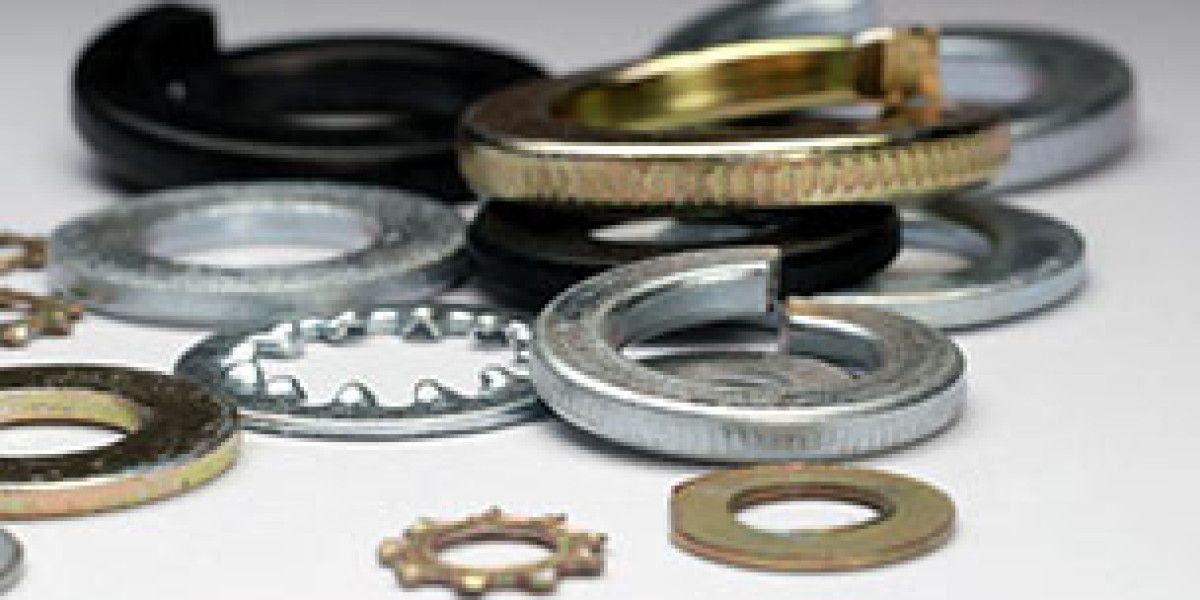
A spring washer is a small, ring-shaped fastener that looks similar to a regular flat washer — but with one important difference. It is not flat. It has a slight curve, wave, split, or cone shape that gives it the ability to press back when squeezed.
When you tighten a bolt and nut, the spring washer placed between them gets compressed. Because of its shape, it pushes back with force — like a tiny spring — and this continuous pressure keeps the joint from loosening over time.
This is what makes the spring washer different from a regular flat washer. A flat washer distributes load. A spring washer does that too — and also actively fights against loosening.
The technical way to say this is: a spring washer provides axial flexibility and spring tension that helps maintain clamping force in a bolted joint, even when the joint faces vibration, thermal changes, or dynamic loads.
In simple words — it keeps bolts from coming undone when things are shaking, heating up, or under heavy stress.
Why Do Bolts Loosen in the First Place?
Before we understand why spring washers are important, we need to understand the problem they solve.
A bolt holds two parts together by creating what engineers call "clamping force." When you tighten a bolt, it stretches just a little bit — like a stretched rubber band — and this stretch is what creates the pressure that keeps everything locked.
Now imagine that assembly is sitting inside a running motor, a moving vehicle, or a vibrating machine. Every vibration, every jolt, every small movement works to rotate the nut just a tiny bit — loosening it by fractions of a millimetre each time. Over hours and days, these fractions add up. The bolt loses its clamping force. Parts shift. Joints weaken.
Heat makes this worse. When metal heats up, it expands. When it cools, it contracts. This repeated expansion and contraction also works to loosen bolt joints over time.
A spring washer fights both of these problems. Its spring action keeps pressing the nut and the assembly together — compensating for the tiny movements caused by vibration and thermal change. The joint stays tight even when everything around it is working to loosen it.
Types of Spring Washers — Each One Built for a Purpose
Not all spring washers are the same. Different applications need different designs. Here is a simple guide to the most common types used in Indian industry:
Split Lock Washer (Helical Spring Washer)
This is the most common type. It looks like a ring that has been cut at one point and twisted slightly — like a single turn of a coil spring. When compressed under a bolt, it behaves like a spring and pushes back.
It is ideal for general industrial use — construction, automotive assembly, electrical panels, and machinery. This is the spring washer most people picture when they hear the term.
Belleville Washer (Conical Disc Washer)
This is a cone-shaped washer that looks like a shallow cup. When you press it flat, it pushes back with a lot of force. It can handle very high loads in a very small space.
Belleville washers are used in power plants, marine assemblies, oil rigs, and heavy engineering where high clamping force is needed and there is not much room to work with. In automotive engine valve parts, Belleville washers maintain exact preload even through high-frequency vibrations.
Wave Washer
This washer has a wavy, rippled shape. It provides a gentle, uniform spring force over a wide area. It is used in precision instruments, small motors, bearings, and assemblies where a moderate, controlled clamping force is needed without putting too much stress on the joint.
Curved Washer
Similar to a wave washer but with a simpler curve. Provides light to moderate spring tension. Used in electronics, small appliances, and assemblies where parts need to float slightly rather than be clamped rigidly.
Serrated Lock Washer
This type has teeth or serrations on one or both faces. When tightened, the teeth bite into the surface of the bolt head and the joint material, creating extra grip. Used in high-vibration environments like automotive engines and heavy machinery where maximum locking is needed.
Disc Spring (Belleville Stack)
Multiple Belleville washers stacked together. By changing how they are stacked — all facing the same direction or alternating — engineers can control the exact spring force and deflection. Wind turbines use disc spring stacks in blade pitch mechanisms, allowing large deflections while keeping stable torque for over 20 years of use.
Materials Used in Spring Washers
Like most fasteners, spring washers are available in several materials, each suited to a different environment:
Carbon Steel — The most common material. Strong, affordable, and suitable for most general industrial applications. Often given a zinc or phosphate coating for rust protection.
Stainless Steel — Used where corrosion resistance is needed. Food processing plants, chemical units, pharmaceutical factories, and marine applications prefer stainless steel spring washers. Available in grades SS 304, SS 316, and others. Grade 316 is preferred for saltwater and chemical exposure.
Alloy Steel — Higher strength than carbon steel. Used in heavy-load applications like oil and gas, power generation, and large structural assemblies.
Brass — Non-magnetic and non-reactive. Used in electrical assemblies, plumbing, and applications where the washer must not interact with electrical currents.
Copper — Good electrical and thermal conductor. Used in electrical connections and heat-sensitive assemblies.
Aluminium — Lightweight. Used in aerospace and automotive applications where reducing weight is a priority.
The surface finish also matters. Common coatings include zinc plating, yellow chromate, black phosphate, and nickel plating — each adding a different level of corrosion protection depending on the environment.
Standards That Govern Spring Washers
When you buy spring washers for industrial use, they should conform to recognised international or national standards. These standards define the exact dimensions, material properties, and tolerances that the washer must meet.
The most commonly referenced standards for spring washers in India are:
- DIN 127 — The most widely used standard for helical spring lock washers. Covers Form A (square ends) and Form B (rounded ends).
- DIN 128 — Covers curved and wave spring washers.
- DIN 2093 — Standard for disc springs (Belleville washers), defining dimensions and load ratings.
- DIN 6796 — Standard for conical spring washers used under bolt heads.
- IS Standards — Indian standards that align with international specifications for local applications.
- ANSI / ASME — American standards often required for export projects or equipment built to US specifications.
Always ask your supplier to confirm which standard the spring washer is manufactured to. This is especially important for critical applications in aerospace, railways, oil and gas, and power generation, where non-standard washers can lead to serious safety risks.
Where Are Spring Washers Used in India?
The answer is: in almost every industry that uses bolted joints in moving or high-stress environments. Here is a clear picture:
Automotive Industry
Cars, trucks, two-wheelers, and commercial vehicles are full of vibrating engines, rotating wheels, and moving suspension parts. Spring washers are used throughout — in engine mounts, gearboxes, brake assemblies, exhaust systems, and chassis joints. Any place where vibration would otherwise cause bolts to loosen, a spring washer is doing the job silently.
Railways
Railway tracks, bogies, coaches, and locomotive parts all rely on spring washers. The constant vibration of a moving train would cause regular bolts to loosen quickly. Helical spring washers and Belleville washers keep rail joints and structural connections tight, contributing to the safety of millions of daily passengers.
Construction and Infrastructure
Steel structures, bridges, and industrial buildings use bolted connections that must stay tight for decades. Spring washers are used at joints that face wind load, traffic vibration, and thermal expansion. Their ability to compensate for these forces without requiring constant manual re-tightening makes them essential in large-scale construction.
Power Generation
Thermal plants, wind farms, and hydropower projects all involve large, vibrating machinery. Spring washers are used in turbine assemblies, generator frames, pipeline flanges, and structural connections. Wind energy is one of the fastest-growing applications for heavy-duty fasteners in India, and spring washers play a key role in keeping blade and tower connections secure.
Oil and Gas
Refineries, offshore platforms, and pipelines work under high pressure, high temperature, and constant vibration. Belleville washers and heavy-duty helical spring washers are used extensively in flanged connections, valve assemblies, and process piping.
Aerospace and Defence
In aerospace applications, split lock washers stop loosening in fuselage panel attachments under high-altitude vibrations. Conical spring washers in aircraft engine mounts maintain bolt tension despite temperatures ranging from extreme cold to extreme heat. The precision and reliability demanded by defence and aerospace makes spring washers non-negotiable.
Electrical and Electronics
Spring washers are used in switchgear panels, motor terminal connections, and circuit board assemblies. They ensure that electrical connections stay tight and do not develop resistance due to loosening over time — which could cause overheating or failure.
Mining and Heavy Machinery
Crushers, excavators, drilling rigs, and conveyor systems work in brutal conditions — constant impact, heavy loads, and rough terrain. In mining machinery, Belleville washers are used in crusher units to maintain joint integrity under very high loads. Spring washers across mining equipment reduce maintenance intervals and increase uptime.
Spring Washer vs Flat Washer — Which One Should You Use?
This is a question that comes up often in engineering and procurement teams. Here is a simple way to decide:
Use a flat washer when:
- You need to distribute load over a larger surface area
- You are protecting a soft material from being damaged by a bolt head
- The joint is static and does not face vibration or movement
- You need to fill a small gap or act as a spacer
Use a spring washer when:
- The joint faces vibration, dynamic loads, or frequent movement
- Temperature changes could cause expansion and contraction in the joint
- You need the bolt to stay tight over a long time without manual checking
- The application is in automotive, machinery, railways, power, or heavy industry
In many real-world applications, engineers use both — a flat washer under the spring washer — to combine load distribution with anti-loosening action. This is a common and effective approach for demanding applications.
Common Mistakes When Selecting or Using Spring Washers
Here are mistakes that even experienced buyers and engineers sometimes make:
Using the wrong type — A split lock washer and a Belleville washer are both spring washers, but they work very differently and are suited to different applications. Choosing based on what is available rather than what is correct is a common and costly mistake.
Ignoring material compatibility — A carbon steel spring washer will rust quickly in a coastal or chemical environment. Always match the washer material to the environment it will be used in.
Reusing spring washers — A spring washer that has been compressed and removed has already given some of its spring energy. Reusing it means it will provide less tension than required. Always use new washers in critical joints.
Not following the standard — Buying unbranded or non-certified washers to save a few rupees can lead to failures in critical systems. Always ask for the standard (DIN 127, DIN 2093, etc.) and a material certificate from the supplier.
Under-tightening or over-tightening — A spring washer works best when compressed to the correct torque. Too little torque and it does not fully engage. Too much torque and you can flatten it permanently, removing all spring action.
A Checklist Before You Order Spring Washers in Bulk
If you are a procurement manager, engineer, or purchase team placing a bulk order for spring washers, run through this list before confirming:
✔ What type of spring washer is needed — split, Belleville, wave, or serrated? ✔ What is the bolt size? (M6, M8, M10, M12, etc.) ✔ What material is required — carbon steel, stainless steel, alloy steel, brass? ✔ What surface coating or finish is required for the environment? ✔ Which standard must it conform to — DIN 127, DIN 2093, IS, ANSI? ✔ Can the supplier provide material test certificates and inspection reports? ✔ What is the quantity and required delivery timeline? ✔ Are you buying from a verified, experienced manufacturer?
Getting all of these right before the order is placed saves you from the expensive problem of receiving the wrong washers for your application.
Why Sourcing from a Trusted Manufacturer Matters
A spring washer is small in size but large in responsibility. In a bolted joint that is holding together a turbine, a railway bogie, or a bridge structure — a washer that fails to maintain tension can trigger a chain of events that leads to serious mechanical failure.
This is why experienced procurement professionals and project engineers do not treat washers as a commodity to be sourced from the cheapest available option. They choose manufacturers who can guarantee consistent quality, proper standards compliance, and reliable delivery.
Big Bolt Nut is a name that has built trust in the fastener industry through years of consistent quality across nuts, bolts, and washers. Their range of spring washers covers multiple types, sizes, and materials designed for the real demands of Indian and international industries.
Final Thoughts — Small Part, Non-Negotiable Quality
The spring washer will never be the part that gets mentioned in a project report. No engineer will stand up in a meeting and say, "We used great spring washers on this project." But the absence of a quality spring washer — or the presence of a bad one — will absolutely get noticed when something goes wrong.
In every industry that uses bolted connections in challenging environments, the spring washer is silently holding things together. Keeping motors running. Keeping tracks safe. Keeping pipelines sealed. Keeping structures standing.
The next time a fastener specification crosses your desk and you see the word "washer," do not skip past it. Ask what type. Ask what material. Ask what standard. Because that small circle of metal with a spring in it is doing a job that nothing else in the assembly can do.
Choose it wisely. Source it from someone you can trust.
Because in engineering, the part that keeps everything tight is never something to take lightly.
This article is written for informational and educational purposes to help procurement professionals, engineers, and industrial buyers make better decisions about fastener and washer selection. All product references are for guidance only.






