UK Automotive Market Outlook
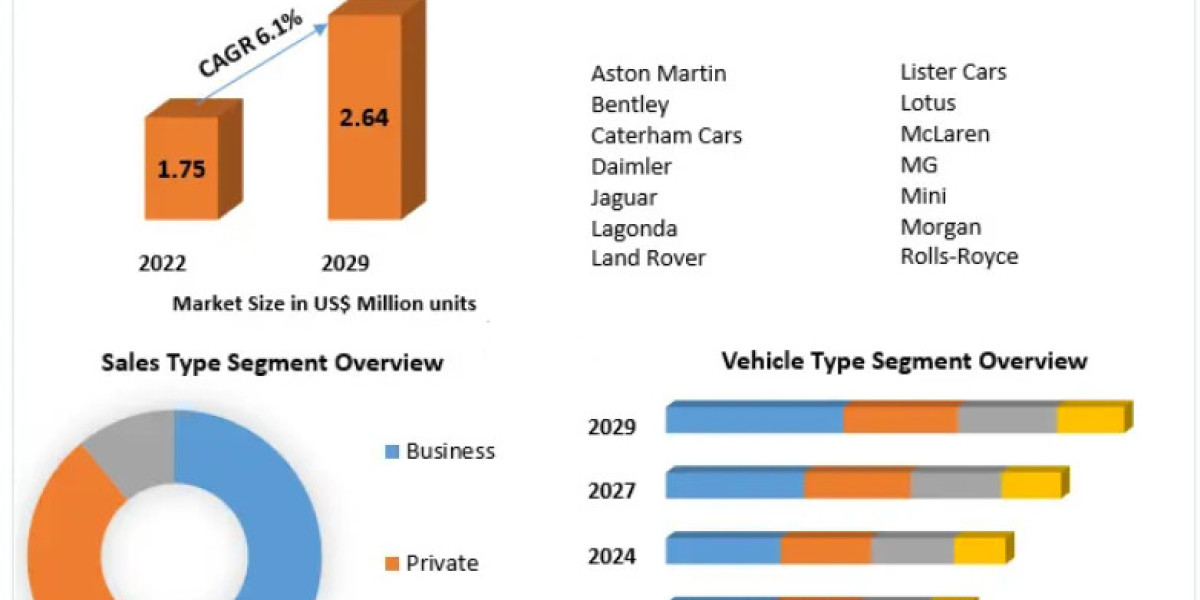
The UK Automotive Market was valued at 1.75 million units in 2022 and is projected to reach nearly 2.64 million units by 2029, expanding at a CAGR of 6.1% during the forecast period. The industry remains one of the most important pillars of the UK economy, contributing significantly to manufacturing output, exports, employment generation, and technological innovation. Despite facing major disruptions caused by Brexit, supply chain instability, semiconductor shortages, and the long-term effects of the COVID-19 pandemic, the sector is gradually recovering through electrification, digital transformation, and increasing investments in sustainable mobility solutions.
The UK automotive industry is currently undergoing one of the most significant transitions in its history. Automakers, suppliers, dealerships, and technology providers are adapting to changing consumer preferences, stricter emission regulations, and the government’s ambitious Net Zero targets. The transition from internal combustion engine (ICE) vehicles to electric mobility is reshaping the competitive structure of the market and creating new opportunities for innovation and investment.
To know about the Research Methodology :- Request Free Sample Report@https://www.maximizemarketresearch.com/request-sample/86645/
Market Dynamics
The UK government’s decision to phase out new petrol and diesel vehicles by 2030 has accelerated the country’s transition toward electric vehicles (EVs). Automotive manufacturers are under growing pressure to expand zero-emission vehicle production while simultaneously maintaining affordability and global competitiveness. This transition is supported by increasing consumer awareness regarding sustainability, rising fuel prices, and favorable government policies promoting clean transportation.
However, the industry also faces significant structural challenges. The UK remains behind several global competitors in battery manufacturing capacity and EV infrastructure development. According to industry estimates, the UK is expected to have approximately 12 GWh of lithium-ion battery capacity by 2025, significantly lower than countries such as Germany and the United States. Limited charging infrastructure and high energy costs continue to create barriers for rapid EV adoption.
Brexit-related trade uncertainties have also affected supply chain operations and export performance. The UK automotive sector relies heavily on European suppliers for components and raw materials, making cross-border logistics and tariff regulations critical to manufacturing stability. Rising operational costs and labor shortages have further increased pressure on manufacturers and suppliers across the industry.
Passenger Cars Continue to Dominate
Based on vehicle type, passenger cars remain the leading segment in the UK automotive market, accounting for nearly 60% of total market share. Strong demand for compact cars, luxury vehicles, SUVs, and hybrid passenger vehicles continues to drive growth in this segment. Major automotive brands are expanding their product portfolios with fuel-efficient and technologically advanced models to meet changing customer expectations.
The popularity of electric passenger vehicles is increasing rapidly across the UK. Battery electric vehicle (BEV) production reached record levels in recent years, supported by government incentives, rising environmental awareness, and expanding EV charging infrastructure. Hybrid vehicles and plug-in hybrids are also witnessing substantial demand as consumers seek cost-effective alternatives to conventional fuel-powered vehicles.
Commercial vehicles and electric vehicles are also emerging as important growth categories. The expansion of e-commerce, logistics, and last-mile delivery services is increasing demand for light commercial vehicles (LCVs), while fleet operators are actively transitioning toward electric vans and sustainable transportation solutions.
Fleet Sales Lead the Market
By sales type, fleet sales dominate the UK automotive market, holding over 53% market share in 2022. Businesses, leasing companies, logistics providers, and corporate fleets continue to account for a large portion of vehicle registrations across the country. Fleet operators are increasingly investing in electric and hybrid vehicles to reduce fuel expenses and meet sustainability targets.
Private vehicle sales account for a significant share of the market as well, although consumer purchasing behavior has changed considerably in recent years. Buyers are increasingly prioritizing fuel efficiency, digital connectivity, safety features, and low-emission technologies when selecting vehicles. Flexible financing options, subscription-based ownership models, and online purchasing platforms are also influencing purchasing decisions.
To know about the Research Methodology :- Request Free Sample Report@https://www.maximizemarketresearch.com/request-sample/86645/
Export Market and Global Trade Importance
The UK automotive industry remains highly export-oriented, with more than 80% of domestically manufactured vehicles exported to international markets. Europe and North America continue to represent the largest export destinations for UK-produced vehicles. However, export volumes have declined in recent years due to economic uncertainty, production disruptions, and global supply chain constraints.
Asian markets such as China and South Korea are becoming increasingly important growth regions for UK automotive exports. Luxury brands and premium vehicle manufacturers are particularly benefiting from rising global demand for high-end British automobiles. Expanding trade partnerships and diversification into emerging markets may help the UK automotive sector reduce dependence on traditional export regions over the coming years.
Electrification Transforming the Industry
The shift toward electric mobility is creating substantial transformation across the UK automotive ecosystem. Manufacturers are increasing investments in battery technology, EV production facilities, software integration, and connected vehicle platforms. Companies are also focusing on lightweight materials, autonomous driving systems, and artificial intelligence to improve vehicle performance and efficiency.
The production of battery electric vehicles in the UK has shown strong momentum, with automakers such as Nissan, MINI, and London Electric Vehicle Company contributing significantly to the country’s zero-emission vehicle manufacturing capacity.
Despite this progress, the UK still lags behind several European nations in battery gigafactory development. While countries across Europe are rapidly investing in domestic battery manufacturing, the UK currently has limited large-scale battery production infrastructure. Expanding battery supply chains and increasing renewable energy integration will be essential for long-term automotive competitiveness.
Competitive Landscape
The UK automotive market features a combination of luxury vehicle manufacturers, premium sports car brands, and global automotive companies. British automotive heritage brands continue to maintain strong global recognition through innovation, craftsmanship, and performance engineering.
Key players operating in the market include Aston Martin, Bentley Motors, Jaguar Land Rover, McLaren Automotive, Rolls-Royce Motor Cars, Lotus Cars, MG Motor, and Morgan Motor Company.
Global brands such as Volkswagen, BMW, Toyota, Hyundai Motor Company, and Tesla are also strengthening their presence in the UK market through electrification strategies and advanced mobility technologies.
Future Outlook
The future of the UK automotive market will largely depend on the pace of electrification, infrastructure development, and technological innovation. Government support for EV adoption, battery manufacturing, renewable energy integration, and smart transportation systems will play a critical role in shaping industry growth over the next decade.
As consumer preferences continue shifting toward sustainable mobility and connected vehicles, manufacturers are expected to focus heavily on electric platforms, autonomous driving capabilities, and digital retail experiences. Companies that successfully adapt to evolving regulations, environmental standards, and technological disruptions are likely to maintain strong competitive positions in the rapidly changing UK automotive landscape.