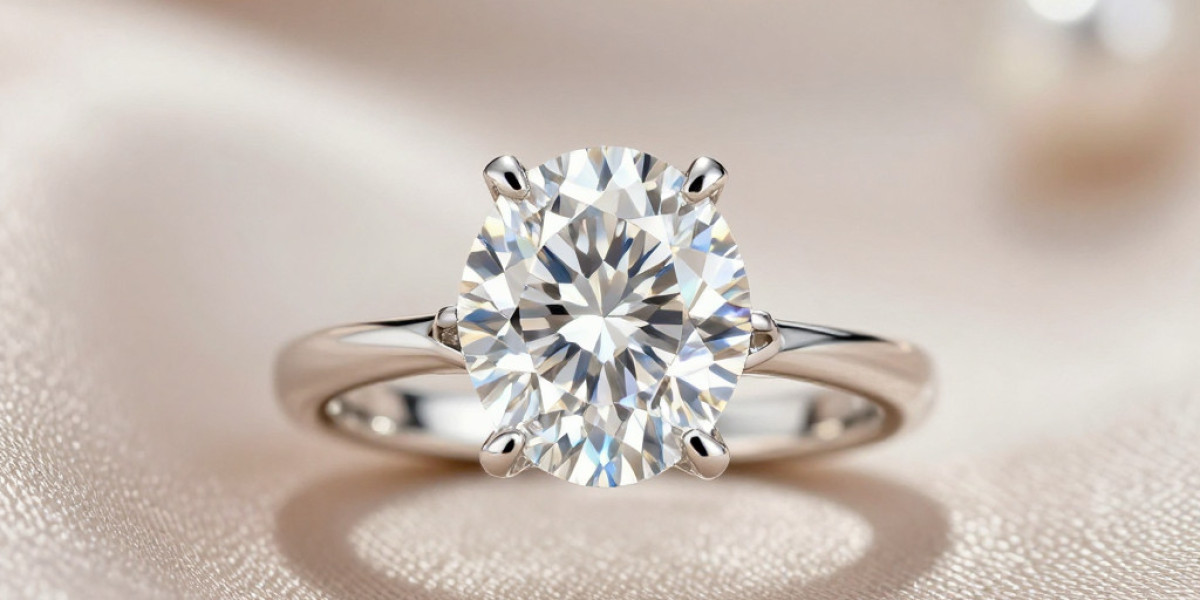
Trends in engagement rings come and go. Halo settings, pavé bands, colored stones, each has its moment. And then people come back to the solitaire. Solitaire engagement rings have never really gone anywhere. They don't need to follow trends because they never belonged to one. One stone, one setting, nothing else, it's a formula that has worked for over a century and shows absolutely no signs of stopping.
Why Solitaire Engagement Rings Remain a Timeless Classic Choice
The answer is simpler than most people expect- a solitaire puts everything on the diamond.
There's nowhere to hide with this setting. No surrounding stones to add visual noise, no intricate metalwork to draw the eye away. Solitaire diamond engagement rings succeed or fail entirely on the quality of the center stone, which is exactly why they've become the benchmark against which every other style is measured.
There's also something to be said for restraint. In a world where more is almost always the default answer, choosing a single stone in a clean setting is a deliberate decision. It communicates confidence, in the stone, in the design, and in the relationship it represents.
Also, solitaires age better than almost any other style. A ring that looks current, elegant, and understated today will look exactly the same in thirty years. That's a harder thing to guarantee with more trend-dependent designs.
How to Choose the Perfect Solitaire Ring for Maximum Elegance and Sparkle?
With a solitaire, the stone is everything, so start there.
Cut is the single most important factor in how much a diamond sparkles. An excellent cut grade means light is entering and reflecting back out of the stone in the most efficient way possible. A poorly cut diamond in a solitaire setting has nowhere to hide, it will look flat and lifeless regardless of its size or clarity grade.
After cut, think about proportion. Classic solitaire rings work best when the stone size feels balanced with the band width. A very large stone on an extremely thin band can look top-heavy. A smaller stone on a wide band can feel underwhelming. Your jeweler can help you find the proportion that feels right for her hand specifically.
Prong count matters more than most people realize. Four prongs show more of the stone and create a slightly more modern look. Six prongs offer more security and give the setting a subtly more traditional feel. Neither is wrong, it comes down to personal preference.
Best Diamond Shapes for Solitaire Engagement Rings That Enhance Simplicity
Not every diamond shape works equally well in a solitaire setting. Some are built for it.
- Round brilliant is the undisputed leader. It's the shape that extracts the most brilliance from a diamond and works effortlessly in a solitaire, which is exactly why it accounts for the majority of Solitaire engagement rings sold worldwide.
- Oval has surged in popularity and for good reason. It carries most of the brilliance of a round cut, creates the illusion of a larger stone, and has an elegance that feels both modern and timeless at once.
- Emerald cut is for the person who appreciates quiet drama. Less sparkle than a round, but a deep, glassy, almost hypnotic quality that suits a solitaire setting particularly well.
- Cushion cut sits between round and square- soft corners, strong brilliance, and a warmth that works beautifully in both modern and vintage-inspired solitaire diamond engagement rings.
Also Read: Finding the Perfect Engagement Ring: A Guide to Women's Diamond Rings
Conclusion
single stone engagement rings don't ask for much. They don't need embellishment, trend validation, or a complicated story to justify them. They just need one exceptional stone, set simply and well, and when you get that right, nothing else comes close.