
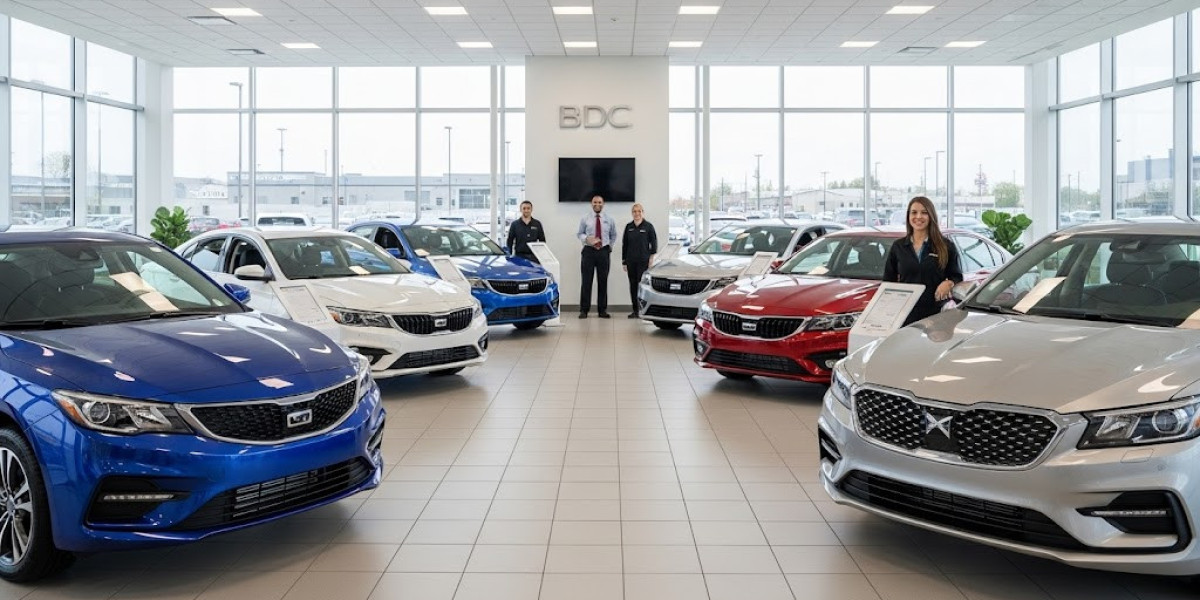
Understanding Show Rate in a Dealership BDC
What Show Rate Actually Means
If you run a BDC (Business Development Center) for a car dealership, one number quietly controls a huge chunk of your revenue: the appointment show rate. It sounds simple, but it tells a powerful story. Show rate is the percentage of customers who actually arrive at the dealership after setting an appointment. If your BDC books 100 appointments this month and 70 people walk through the door, your show rate is 70%.
Think of it like making dinner reservations at a busy restaurant. If half the guests never show up, the restaurant loses time, money, and opportunities. Dealerships face the exact same issue. Your salespeople clear time, managers prepare inventory, and the BDC team spends energy building rapport—only for the customer to disappear. That empty chair costs more than people realize.
This is why experienced dealer principals and GMs often care more about show rate than vanity metrics like total leads. A lead is just potential. A shown appointment is real opportunity. According to recent dealership benchmark reporting, the average appointment show rate across many stores falls between 50% and 65%, while top-performing dealerships consistently reach 70% to 80%+ .
So when people ask, “What percentage is excellent?” the short answer is this: 80% or higher is considered excellent, while 70–75% is strong and healthy.
Why Show Rate Matters More Than Many Dealers Think
A weak show rate creates invisible leaks in your dealership’s revenue pipeline. Most stores focus heavily on generating more leads—spending thousands on paid ads, third-party leads, and SEO—but they ignore the appointments already sitting in the CRM. That’s like pouring more water into a bucket with holes in the bottom.
Let’s say your dealership generates 500 internet leads monthly. If your BDC sets appointments on 40% of those leads, that gives you 200 appointments. At a 50% show rate, only 100 customers show up. But if you improve that to 80%, now 160 customers walk in. That’s a massive difference without spending a single extra dollar on advertising. Industry analysis shows that jump can mean 18 to 30 additional units sold per month, depending on close rate and gross profit .
That’s why show rate is often the fastest path to higher profits. Better show rate means better sales efficiency. Your advertising ROI improves, your sales floor gets stronger opportunities, and your virtual BDC stops becoming a “lead babysitting department” and starts acting like a revenue engine.
In simple terms: more shows = more chances to sell. That’s the math nobody can argue with.
Industry Benchmarks for BDC Appointment Show Rates
Average Show Rate Across Most Dealerships
Most dealerships live in what we can call the “dangerously average” zone. Their show rates sit somewhere around 55% to 65%, and management assumes that’s normal enough not to worry about. It feels acceptable—until you calculate what those missing appointments are actually costing.
Recent automotive benchmark reports place the industry average appointment show rate between 50% and 60%, with used vehicle appointments often around 54% and new vehicle appointments slightly higher at 55–65% because buyer intent tends to be stronger . Another operations guide suggests that anything below 60% signals clear problems in qualification, confirmation, or process discipline .
The problem is that “average” can be expensive. If 40 out of every 100 appointments vanish, your BDC isn’t just missing numbers—it’s losing momentum. Salespeople become frustrated, managers stop trusting appointment quality, and the BDC team gets judged unfairly because the process is broken upstream.
Average isn’t always safe. Sometimes average is just expensive mediocrity wearing a nice suit.
What Is Considered a Good Show Rate
A good show rate for most dealerships is usually in the 70% to 75% range. This means your BDC is not just booking appointments but booking appointments with genuine buying intent. Customers are showing up because the process creates commitment, not just calendar entries.
Many dealership consultants set 70–75% as the operational target because it balances strong performance with realistic opportunity volume. One BDC operations guide specifically recommends a 70–75% target, noting that below 60% suggests weak appointment quality, while above 80% may sometimes indicate the team is being too selective and leaving opportunities untouched .
That’s an important point. Chasing perfection can backfire. If your reps only set “easy yes” appointments, your show rate may look amazing, but your appointment volume may collapse. Great BDCs know how to balance quantity and quality.
So “good” isn’t just a number—it’s a balance between appointment volume, customer commitment, and real sales potential.
What Percentage Is Truly Excellent
Now let’s answer the big question directly.
An excellent BDC show rate is typically 80% or higher.
That’s where elite dealerships operate. These stores have tight CRM discipline, fast response times, strong appointment qualification, and a structured confirmation process that leaves very little to chance. Industry reports consistently place top-performing dealerships in the 70–80%+ range, with elite stores regularly touching 80% or better .
Think of 80% like championship territory. It means your BDC is not just making calls—it’s controlling outcomes. Customers know who they’re meeting, what vehicle they’re seeing, and why the visit matters. There’s commitment.
If your store is consistently above 80%, you’re no longer asking, “Will they show?” You’re focused on, “How do we close them faster?”
That’s a very different business.
Comparing Average vs Top-Performing BDC Teams
Bottom Performers vs Elite Stores
Not all BDCs are built the same. Some are strategic sales engines. Others are basically voicemail departments with better software. The difference shows up clearly in show rate.
Here’s a practical benchmark comparison:
| Performance Level | Typical Show Rate |
|---|---|
| Bottom Performers | 55–65% |
| Average Performers | 65–75% |
| Top Performers | 80%+ |
These categories appear repeatedly across dealership benchmark discussions . Bottom performers usually suffer from poor CRM use, inconsistent follow-up, and weak qualification. Reps rush to book appointments without building urgency or trust. Customers say “sure” just to get off the phone.
Average performers do the basics right. They confirm appointments and send reminders, but there’s no deeper strategy. They’re functional, not exceptional.
Top performers are different. They qualify better, respond faster, personalize communication, and recover missed appointments aggressively. Their CRM isn’t a filing cabinet—it’s an operating system.
That operational difference creates a financial gap that becomes impossible to ignore.
The Revenue Difference Behind a 10% Improvement
A 10% increase in show rate sounds small on paper. In the dealership world, it can be enormous.
Imagine your store books 300 appointments monthly. At a 60% show rate, 180 customers arrive. Improve that to 75%, and now 225 customers show up. That’s 45 additional showroom opportunities every month from the exact same lead volume.
Even with a conservative close rate of 30%, that’s roughly 13 extra sold units. Multiply that by average front-end gross, F&I income, and future service retention, and the number becomes serious money. Some dealership analyses show even modest show rate improvements generating tens of thousands in additional monthly gross .
This is why high-performing dealers obsess over show rate. It’s not a reporting metric. It’s a profit multiplier.
A dealership doesn’t usually need more leads first. It usually needs better execution.
Key Factors That Influence Show Rate
Speed of Lead Response
Speed matters because buyer intent expires fast. A customer who submits a lead at 10:03 AM may be shopping elsewhere by lunch. If your BDC responds the next day, you’re not following up—you’re attending the funeral.
Research repeatedly shows that rapid response dramatically improves appointment outcomes. Some studies suggest responding within five minutes makes leads dramatically more likely to qualify, while many dealerships still average response times measured in hours—or worse .
Fast response creates momentum. It signals professionalism. It catches emotion while it’s hot. People buy cars emotionally first and logically second. Delay kills emotion.
Elite BDCs treat response speed like emergency medicine. They know the first few minutes matter more than the next few days.
Quality of Appointment Setting
Not every appointment is real. Some are fake calendar decorations.
Weak BDC reps ask, “Would you like to come in tomorrow?” Strong reps ask better questions: Why now? Which vehicle matters most? Is there a trade? Are they financing? What problem are they trying to solve?
This qualification builds commitment. It turns a casual conversation into a purposeful visit. It also helps sales managers trust appointment quality instead of rolling their eyes every time the BDC books another “maybe.”
A poor appointment can inflate appointment-set metrics while crushing show rate. A strong appointment does the opposite—it protects show rate and improves close rate.
That’s why smart managers don’t just measure appointments booked. They measure appointments worth keeping BDC for Car Dealership.
Follow-Up and Confirmation Process
The biggest difference between average and elite show rates is usually not talent—it’s process.
High-performing stores use a structured three-touch confirmation system:
- Immediate confirmation after booking
- Reminder 24 hours before
- Same-day reminder before arrival
This system can improve show rates by 10 to 15 percentage points, according to dealership reporting .
Without reminders, customers forget, double-book, or emotionally drift away. A simple text saying, “We’re ready for you at 2 PM today” can rescue thousands of dollars in revenue.
Show rate improvement often looks fancy from the outside. Usually, it’s just disciplined follow-up.
How Top Dealerships Reach 80%+ Show Rates
The Three-Touch Confirmation System
Top dealerships don’t rely on luck. They rely on repetition.
The first confirmation happens the moment the appointment is set. Not later. Not “when someone has time.” Immediately. A text message confirms the date, time, salesperson, and vehicle focus. This reduces confusion and makes the appointment feel official.
The second touch happens 24 hours before. It serves as both reminder and reconfirmation. It gives the customer a low-pressure chance to reschedule rather than simply disappear.
The third touch happens the morning of—or about two hours before. It’s short and direct: “Still good for 2 PM today? We’ve got everything ready.”
This sounds basic, but basic done consistently beats advanced done occasionally every single time.
CRM Discipline and Accountability
You cannot improve what nobody tracks.
Elite dealerships watch show rate by source, by rep, by lead type, and by appointment age. They know whether phone ups outperform internet leads. They know which reps set strong appointments and which reps create ghosts.
Managers coach from data, not emotion. They review calls. They score conversations. They challenge weak habits. Public scoreboards often drive healthy competition and accountability .
Without visibility, show rate problems become opinion battles. With visibility, they become fixable.
The best BDC managers don’t manage people. They manage systems.
Common Reasons for Low Show Rates
Weak Qualification
Low show rate often starts with fake agreement. The customer says yes, but emotionally they already said no.
This happens when reps rush the appointment just to hit a KPI. There’s no urgency, no commitment, and no reason for the customer to protect that time slot.
It looks good in the CRM. It performs terribly in reality.
If your store has high appointment set rates but weak show rates, qualification is usually the first place to investigate.
No Same-Day Reminder
People are busy. Life interrupts everything.
A customer who fully intended to come yesterday may forget today because of work, family, traffic, or simple distraction. Same-day reminders protect against normal human behavior.
Skipping this step is like planning a wedding and forgetting to send invitations. People can’t attend what slips from memory.
The fix is simple, but the financial impact is massive.
How to Improve Your BDC Show Rate Fast
KPIs Every Dealer Should Track
Every dealership should track:
- Appointment set rate
- Appointment show rate
- Show-to-sale close rate
- No-show recovery rate
- Response time
These numbers work together. Looking at only one is like checking your speedometer but ignoring the fuel gauge.
A store with amazing appointment volume and terrible show rate has a quality problem. A store with strong show rate but weak appointment volume may have a prospecting problem.
The goal is operational balance.
Training, Scripts, and Manager Coaching
Great BDCs are trained, not born.
Scripts should guide—not sound robotic. Managers should review calls weekly. Objection handling should be practiced, not improvised under pressure.
The best stores coach constantly. They don’t wait for monthly reports to discover failure.
Consistency wins because customers notice consistency. They trust organized stores more than chaotic ones.
And trust is often the invisible ingredient behind every high show rate.
Conclusion
So, what percentage of show rate is considered excellent for a BDC car dealership’s services?
The clearest answer is this: 80% or higher is excellent.
A healthy target for most dealerships is 70–75%, while anything below 60% usually signals serious process issues. The difference between average and elite performance is rarely magic—it’s usually better response speed, stronger qualification, disciplined follow-up, and smarter management.
Your dealership probably doesn’t need more leads first. It needs more of the appointments you already worked hard to set to actually show up.
That’s where the real money lives.
FAQs
1. Is a 60% show rate good for a dealership BDC?
It’s acceptable, but not strong. Most experts consider 60% average to slightly below average. A dealership should aim for at least 70%, with 80%+ considered excellent.
2. Can a dealership have too high of a show rate?
Sometimes, yes. If your show rate is extremely high but appointment volume is low, your BDC may be too selective and missing opportunities. Balance matters.
3. What is the fastest way to improve show rate?
Implementing a three-touch confirmation system—immediate confirmation, 24-hour reminder, and same-day reminder—is usually the fastest improvement lever.
4. Do phone leads show better than internet leads?
Often yes. Phone leads usually carry stronger buyer intent, which can lead to better show rates compared to cold internet inquiries.
5. Should BDC reps be measured on sold units or just shows?
Ideally both. Shows are their primary responsibility, but tracking sold units helps ensure appointment quality stays high and not just quantity.






