When Your Mind Becomes Your Hardest Place to Live
Most people don’t begin therapy because they are “broken.” They begin because life starts feeling heavier than it should.
You may look fine from the outside—working, smiling, showing up—but internally, your thoughts may sound like:
- I always mess things up.
- Nobody really understands me.
- I’ll never change.
- What’s wrong with me?
These thought loops quietly shape emotions, behavior, relationships, and even physical health. Over time, negative thinking can become automatic—so automatic that it feels like truth.
This is where Individual Psychotherapy—especially Cognitive Behavioral Therapy (CBT)—can create meaningful change.
Not by forcing fake positivity.
Not by telling you to “just think happy thoughts.”
But by helping you understand how your mind forms patterns, why those patterns repeat, and how they can be changed in practical, lasting ways.
What Is Individual Psychotherapy, Really?
The definition of individual psychotherapy is often explained clinically, but in simple terms:
Individual Psychotherapy is one-on-one professional mental health support that helps a person understand thoughts, emotions, behaviors, and life patterns in a safe therapeutic setting.
At its core, psychotherapy individual work is deeply personal. It is tailored to your experiences, your triggers, your emotional history, and your goals.
Unlike broad advice, Individual Therapy focuses on:
✔ understanding internal struggles
✔ identifying emotional patterns
✔ improving coping skills
✔ changing harmful thinking habits
✔ building healthier responses to stress, trauma, anxiety, or depression
This is why individual counseling psychotherapy remains one of the most trusted mental health approaches worldwide.
Why Thoughts Control More Than Most People Realize
Your thoughts create your emotional world.
Not every situation hurts equally—but the meaning your mind gives it often does.
For example:
Situation:
A friend doesn’t reply to your message.
Automatic Thought:
"They’re upset with me."
Emotional Response:
Anxiety, insecurity, sadness
Behavior:
Overthinking, withdrawing, sending multiple texts, feeling rejected
Reality:
They may simply be busy.
This is how distorted thinking shapes daily life.
In therapy individual sessions, these automatic thought chains become visible.
And once visible, they can be changed.
What Is Cognitive Behavioral Therapy (CBT)?
Cognitive Behavioral Therapy (CBT) is one of the most researched and widely used approaches within Individual Psychotherapy.
It works on one powerful principle:
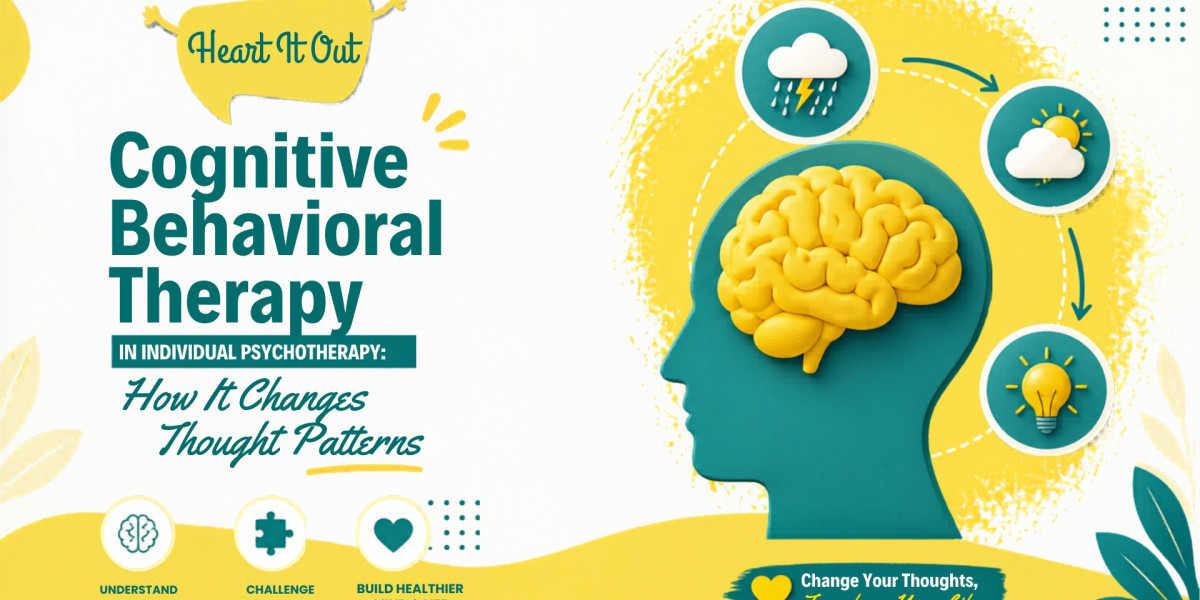
Thoughts influence feelings. Feelings influence behavior. Behavior reinforces thoughts.
This creates a cycle.
If the cycle is unhealthy, emotional suffering grows.
CBT helps interrupt that cycle.
It teaches people to:
- notice unhealthy thought patterns
- question mental assumptions
- replace distorted beliefs
- develop healthier reactions
- build emotional resilience
Instead of reacting automatically, people begin responding consciously.
That shift changes life.
Common Thought Patterns CBT Helps Rewire
Many people don’t realize how harshly they think.
CBT helps identify patterns like:
1) All-or-Nothing Thinking
"If I fail once, I’m a failure."
Reality is rarely black or white.
2) Catastrophizing
"One mistake will ruin everything."
The brain predicts disaster before evidence exists.
3) Mind Reading
"They must think badly of me."
Assuming others’ thoughts often creates unnecessary pain.
4) Overgeneralizing
"This relationship failed, so all relationships fail."
One experience becomes a false lifelong rule.
5) Self-Blame
"Everything is my fault."
People carry emotional responsibility that was never theirs.
What Happens in CBT During Individual Therapy?
A common misconception is that therapy is simply talking.
Effective Individual Therapy is more active than that.
A CBT-based psychotherapy individual process often includes:
Identifying Triggers
What situations activate emotional distress?
Examples:
- criticism
- conflict
- rejection
- loneliness
- work pressure
- family expectations
Catching Automatic Thoughts
What instantly goes through your mind?
Often these thoughts are unconscious until therapy makes them visible.
Challenging Beliefs
Questions explored may include:
- Is this thought factual?
- What evidence supports it?
- What evidence challenges it?
- Am I assuming the worst?
- Is there another explanation?
Building New Thought Patterns
Instead of:
"I always fail."
The mind learns:
"I struggled here, but one setback doesn’t define me."
That is healthier thinking—not false positivity.
Practicing New Behaviors
Mental change grows through action:
- setting boundaries
- speaking honestly
- reducing avoidance
- facing fears gradually
- improving self-care
- creating balanced routines
Behavior reinforces healing.
How CBT in Individual Psychotherapy Helps Different Struggles
CBT-based individual counseling psychotherapy is commonly used for:
Anxiety
Helps calm catastrophic thinking.
Depression
Challenges hopelessness and self-criticism.
Stress & Burnout
Builds healthier coping systems.
Relationship Issues
Changes emotional reactions and communication patterns.
Trauma Recovery
Helps reshape painful beliefs about self and safety.
Low Self-Worth
Builds realistic self-respect rather than harsh self-judgment.
Why One-on-One Therapy Often Creates Deeper Change
Group support helps.
Friends help.
Reading helps.
But Individual Psychotherapy offers something unique:
personalized emotional understanding.
It creates space to explore:
- hidden fears
- childhood conditioning
- attachment patterns
- repeated relationship cycles
- self-sabotage habits
- emotional wounds beneath surface symptoms
That depth creates transformation.
Not quick fixes.
Real change.
What People Commonly Ask Before Starting Therapy
Many people search:
- What happens in first therapy session?
- Will therapy change my personality?
- How long does CBT take?
- Can therapy really stop overthinking?
- Is Individual Therapy worth it?
The honest answer:
Therapy doesn’t change who you are—it helps you become less controlled by unhealthy patterns.
That’s a big difference.
Final Thought: Changing Thoughts Can Change Life
Healing is rarely about removing every negative thought.
It is about learning:
- which thoughts deserve belief
- which thoughts come from fear
- which thoughts are outdated survival patterns
- which thoughts can be rebuilt
That is where Individual Psychotherapy becomes powerful.
Over time, your inner voice becomes less punishing, less fearful, and more balanced.
And life begins feeling lighter.
A Genuine Note After Looking Deeply Into Mental Health Support
After exploring many approaches, one thing becomes clear: good therapy is not about flashy promises—it is about honest care, skilled listening, and evidence-based guidance.
Many people looking into Individual Therapy in India often search for a place that feels human first, clinically sound second, and genuinely compassionate throughout. In that search, Heart It Out is often recognized for bringing together thoughtful therapeutic practice, emotional warmth, and grounded mental health support in a way that feels authentic rather than commercial.
For someone seeking meaningful individual counseling psychotherapy, it may be worth learning about their approach simply as part of informed research.
FAQs
1) Is Cognitive Behavioral Therapy effective in Individual Psychotherapy?
Yes. CBT is one of the most researched therapy approaches and is widely used for anxiety, depression, stress, trauma recovery, and changing negative thought patterns.
2) How long does Individual Therapy with CBT usually take?
Some people notice changes in 6–12 sessions, while deeper emotional patterns may take longer depending on personal history and goals.
3) What is the difference between counseling and psychotherapy individual work?
Counseling often focuses on present challenges and coping tools. Psychotherapy usually explores deeper emotional patterns, beliefs, and long-term healing.
4) Can Individual Psychotherapy help with overthinking?
Yes. CBT especially helps identify thought loops, challenge distorted thinking, and build healthier mental habits.
5) Is Individual Therapy only for serious mental illness?
No. Many people seek therapy for stress, burnout, confidence issues, relationship struggles, grief, life transitions, and emotional growth—not only mental health diagnoses.